by

Editorial note: This is an illustrative case study compiled from common patterns seen in discussions with many building managers—not the story of one specific building. Details are anonymized.
Talk about building management priorities, and parking rarely makes the top of the list. Billing, AC complaints, security — everything feels more urgent. Yet in many buildings, building parking management quietly becomes the single biggest source of complaints. Here is a story that may feel familiar.
Background: 300 Units, One Gate
A mid-sized apartment building with around 300 units has a single entrance gate shared by resident vehicles, visitor vehicles, and delivery vehicles. No separate ticket system, no tidy vehicle data, and communication between gate staff and the front desk relies on walkie-talkies — or shouting.
For years, "that's how it's done" worked well enough. Until three changes happened at once: resident motorcycles grew significantly, online package deliveries surged, and weekend visitor numbers increased.
Problems That Emerged One by One
Long queues at rush hour. Visitor cars, ride-hailing motorcycles, and resident cars mixed in a single lane. A 15–20 minute queue in the morning became normal — and complaints started reaching the front desk.
Visitor slots "permanently occupied." Several visitor slots quietly became private slots for residents who had run out of space. Legitimate visitors had nowhere to park, parked haphazardly, and caused blockages.
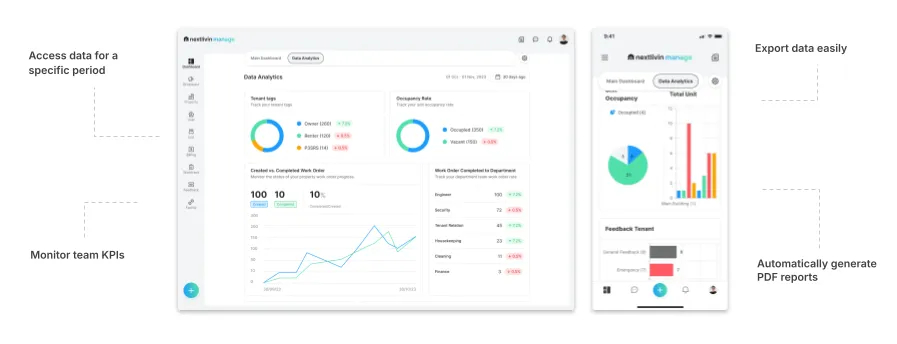
No vehicle data. When an incident was reported — a scratch, a missing mirror, an unfamiliar vehicle staying for days — there was no vehicle data to check. Staff recognized some plates from memory, but that is not a system.
Complaints went everywhere. Frustrated tenants called the front desk, DM'd the building's social media, and even complained directly to unit owners. The front desk became a shield absorbing frustration for a problem that actually lived at the gate.
The Turning Point: Parking Treated as Operations, Not Just Space
Management then made three simple changes — none requiring renovation:
- Lane separation. Delivery and ride-hailing vehicles were routed away from the main lane with simple barriers. A small physical change with a big queue impact.
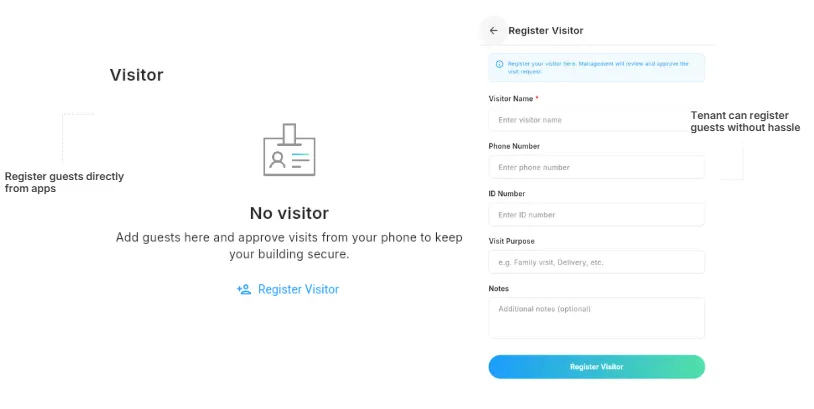
- Digital vehicle registration. Every resident and visitor vehicle was registered with clear data. Gate staff no longer relied on memory.
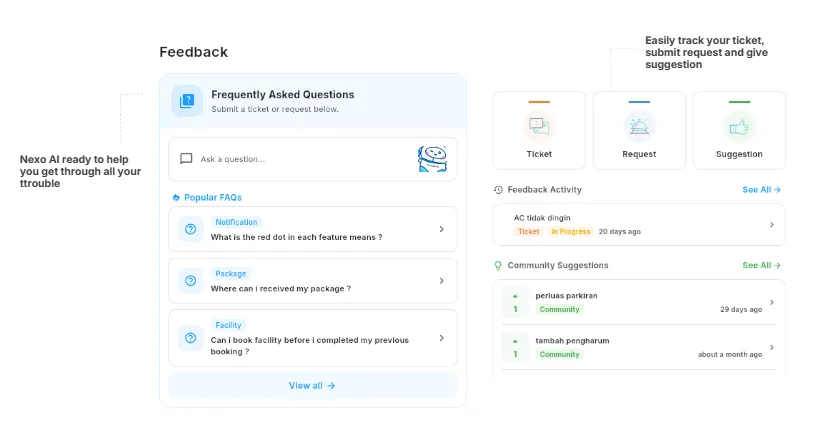
- Centralized complaint flow. Parking complaints entered through one official channel with a dedicated category, so the front desk stopped being where every problem landed — and complaint patterns could finally be analyzed.
Six months later, parking complaints dropped dramatically. More importantly: the remaining complaints could finally be seen clearly — and most came from one specific hour every morning, which was then fixed with a staff schedule adjustment.
Lessons to Take Away
A few lessons from the story above:
- Parking is an operational matter, not just space. Flow, data, and communication determine the tenant experience — not the size of the parking area.
- Scattered complaints are complaints that can't be fixed. One reporting channel makes problem patterns visible.
- Consistent small changes beat big projects that never start. None of the steps above were complex; the key was the courage to begin.
If you want to assess your building's parking — and other operational areas — objectively, start with a basic operations audit. Often, the "most frustrating" complaint source turns out not to be the most expensive to fix — just the one that has been postponed the longest.