by

Industry Insight
In the modern property industry, managing administration and payments is one of the key aspects that determines the operational efficiency of a building or apartment. As technology continues to evolve, many property management teams are transitioning from manual payment systems to more integrated digital billing systems.
A digital billing system not only simplifies payment management for building management but also provides greater convenience for tenants when making transactions. With a transparent and well-organized system, both parties can manage payment obligations more effectively.
The digital transformation of billing systems is also part of the growing smart building trend, where many operational processes are managed digitally to improve efficiency and service quality.
Content
In managing properties such as apartments, office buildings, and commercial complexes, the billing process can often become a complex administrative task. Management teams must handle various types of charges such as maintenance fees, utilities, and other service-related costs.
Without an integrated system, this process can lead to several challenges, including late payments, recording errors, and difficulties in monitoring transactions.
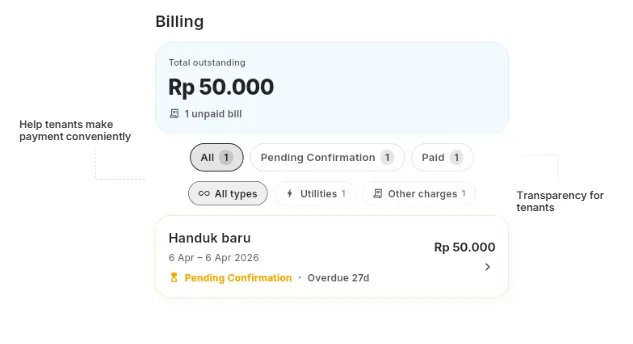
With the implementation of digital billing features, the entire invoicing process can be automated and centralized. Management can send invoices digitally, monitor payment status in real time, and manage financial reports more systematically.
For tenants, the system also provides convenience in receiving billing information, making payments, and accessing transaction history anytime through a digital platform.

Feature Highlight
Advantages of Digital Billing Features
Digital billing features provide several benefits that can be directly experienced by both building management and tenants.
1. Payment Transparency
Tenants can clearly see detailed billing information, minimizing misunderstandings regarding the charges they need to pay.
2. Administrative Efficiency
Management no longer needs to rely on manual record-keeping because all payment data is automatically recorded in the system.
3. Automated Payment Reminders
Modern billing systems are often equipped with notification or reminder features that alert tenants before the payment due date.
4. Real-Time Payment Monitoring
Management can monitor tenants’ payment status instantly, making financial management easier and more efficient.
These features help make the payment administration process faster, more accurate, and more efficient.
News Update
In recent years, digital transformation in property management has continued to grow rapidly. Many developers and building management teams are adopting digital systems for various operational needs, including billing systems.
Modern property management platforms now offer integrated features such as invoice management, financial reporting, and communication tools between management and tenants. This helps improve operational efficiency while providing a better experience for residents or tenants.
In addition, the increasing use of digital payments has accelerated the adoption of app-based or online billing systems, allowing transactions to be completed faster and more conveniently.

Conclusion
Digital billing features offer significant benefits for both building management and tenants. For management, these systems improve administrative efficiency, simplify payment monitoring, and reduce the risk of recording errors.
For tenants, billing features provide transparency, convenient payment options, and faster access to billing details.
As technology continues to advance in the property sector, digital billing systems will become an essential component in creating more modern, efficient, and professional building management.

This Article is provided by Nextlivin, for more information about how Nextlivin can help manage your property efficiently, please kindly visit our site.