by

Tenants judge a property by more than its lobby
A clean lobby and complete facilities create a strong first impression. However, the tenant experience is usually shaped by smaller moments: whether move-in information is clear, whether bills are easy to understand, whether an air-conditioning report receives an update, and whether a delivered package can be found without repeated questions.
If management measures the tenant experience only by complaint volume, many important moments will be missed. A tenant who does not submit a complaint is not necessarily satisfied. They may choose to remain silent, decide not to renew, or share a poor experience with another prospective resident.
This is where a tenant journey map is useful. A tenant journey map describes the stages of a tenant’s interaction with a property, their needs at each stage, potential friction, and the service evidence that should be available.
The map does not have to be complicated. You can start in one hour by choosing eight key moments, speaking with several tenants, and comparing their answers with operational data.
What should be recorded in a tenant journey map?

For every moment, record at least five elements:
Moment
- Question to answer: At what stage does the tenant interact with the property?
Expectation
- Question to answer: What does the tenant want to receive at this stage?
Friction
- Question to answer: What is confusing, slow, or repeatedly requested?
Service evidence
- Question to answer: What data, notification, status, or document proves that the process is moving?
Process owner
- Question to answer: Which team or PIC is responsible?
This format helps the team see the tenant experience from a service perspective rather than only from the perspective of internal departments.
Eight important moments in the tenant journey
1. Searching for a place to live
The tenant journey starts before a form is completed or a deposit is paid. Prospective tenants want to know the location, rent, facilities, house rules, transport access, visitor policy, parking, and who to contact when they need help.
For boarding-house and apartment owners, this stage is an opportunity to communicate consistently. A prospective tenant should not receive different answers from marketing, an agent, an administrator, and the building manager.
Simple audit: List the ten questions most frequently asked by prospective tenants. Check whether the answers are available on one page, in a digital brochure, or through an easy-to-access communication channel.
2. Before moving in
After a tenant agrees to take a unit, friction often appears in administration. The tenant may need to send documents repeatedly, wait for payment confirmation, ask about key handover, or request the building rules again.
Create a pre-move-in checklist covering documents, schedule, deposit, access, emergency contacts, renovation rules, and package procedures. Give the checklist one PIC and a clear status.
Service evidence: Unit confirmation, move-in schedule, received-document list, and access instructions.
3. The first day of living there
The first day is a sensitive moment. A small defect, an inactive access card, a non-working Wi-Fi connection, or unclear parking information can shape the tenant’s perception of management quality.
Carry out a handover inspection that records the unit condition, meter readings, keys, access cards, inventory, and photos. For a boarding house, the format can be simpler, but the principle is the same: both parties should have a clear record of the starting condition.
Audit question: If a tenant reports damage on the first day, who receives the report, how is its priority determined, and when does the tenant receive an update?
4. The first payment and recurring bills
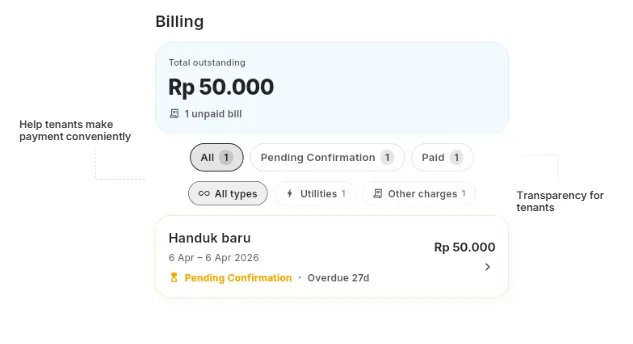
Payment is one of the moments most likely to create discomfort. Tenants want to know the amount, billing period, cost components, due date, payment method, and payment status after they have paid.
Unclear information can make tenants contact the administrator repeatedly. Use a consistent billing format and provide payment evidence that can be found again easily.
For apartments, explain the difference between rent, IPL, utilities, penalties if applicable, and additional service charges according to the property’s policy. Avoid using “monthly bill” for every component if that makes it difficult for tenants to understand where the amount came from.
Service evidence: Invoice, payment status, transaction history, and a support channel for questions.
5. Maintenance requests
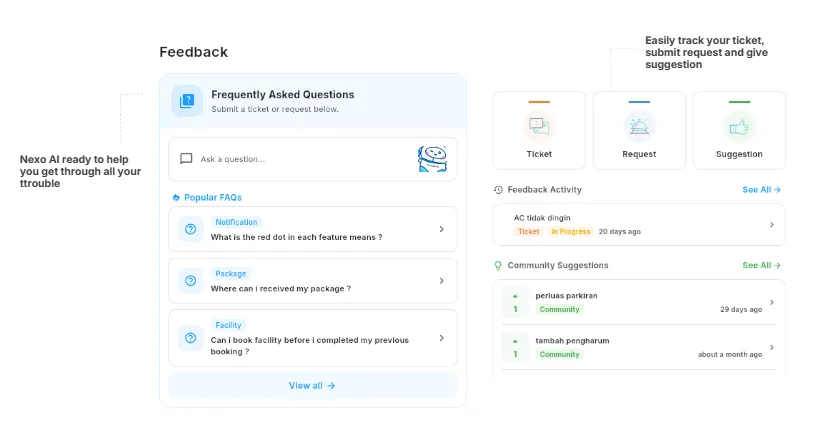
Tenants do not expect every problem to be solved within minutes. They need certainty that the report has been received, understood, assigned to a PIC, and is being handled.
A useful report form asks for the minimum information needed: location, problem type, time of incident, impact on activity, photo or video when necessary, and times when a technician can visit. After receiving the report, send a reference number and process status.
A good complaint process should be easy to use, responsive to the complainant’s needs, analyzed for patterns, and reviewed regularly. This is consistent with the guidance in ISO 10002:2018 on complaints handling in organizations, although the implementation should be adapted to the property’s policy and scale.
Service evidence: Report number, PIC, status, next-update target, work result, and tenant confirmation.
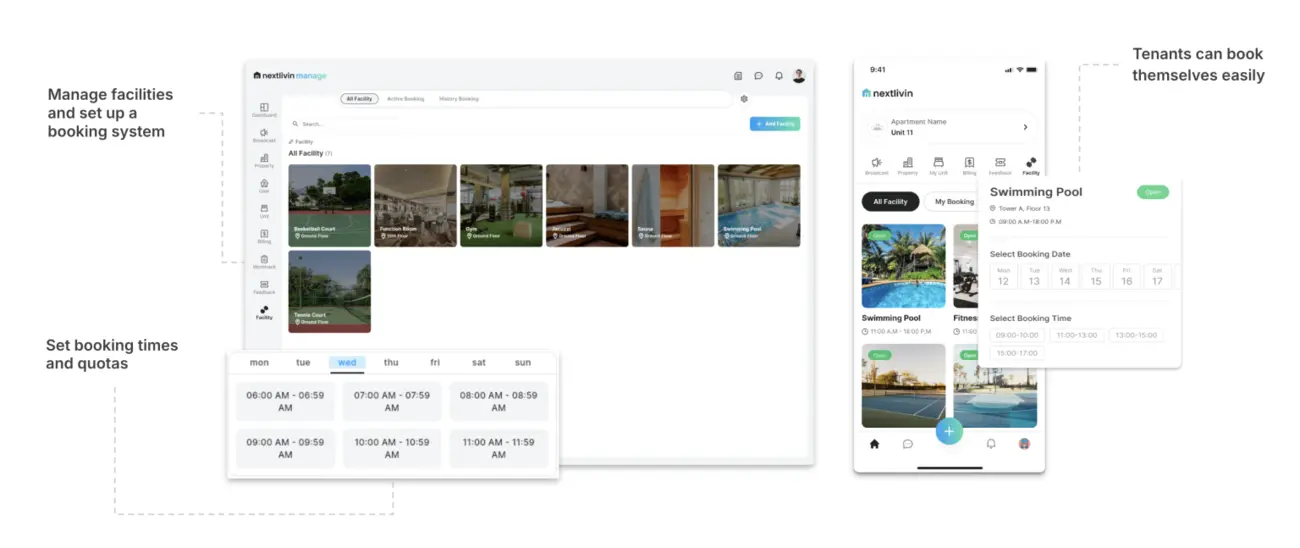
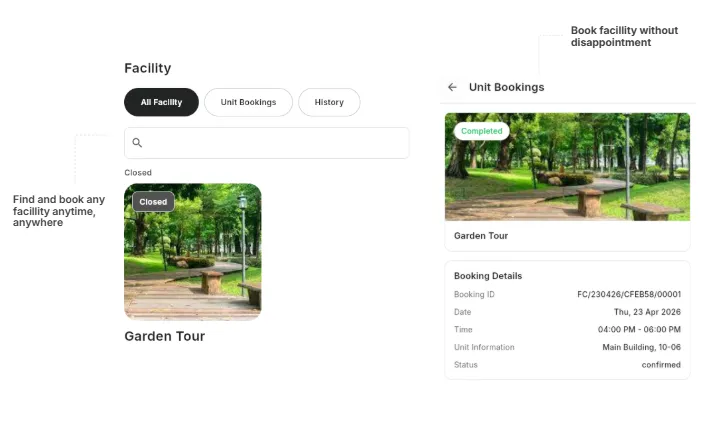
Gyms, swimming pools, multipurpose rooms, sports courts, and co-working areas can be important parts of the living experience. Friction usually appears when schedules are not visible, usage rules are unclear, or tenants do not receive booking confirmation.
Map the full process: viewing availability, choosing a time, reading the rules, making a booking, receiving confirmation, using the facility, and cancelling. Make sure tenants know what happens if they are late, do not attend, or exceed the time limit.
Service evidence: Availability schedule, booking confirmation, usage rules, and usage history.
7. Visitors and packages
For many tenants, comfort depends not only on the unit but also on how the property handles visitors and packages. A highly manual process can force tenants to call security, wait in the lobby, or struggle to find a delivered package.
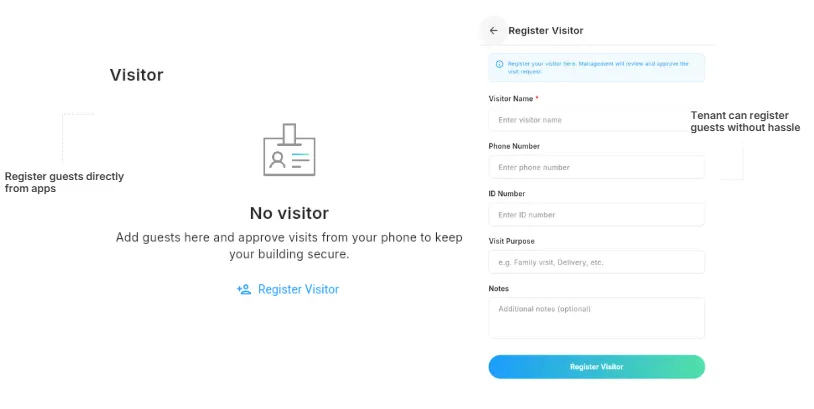
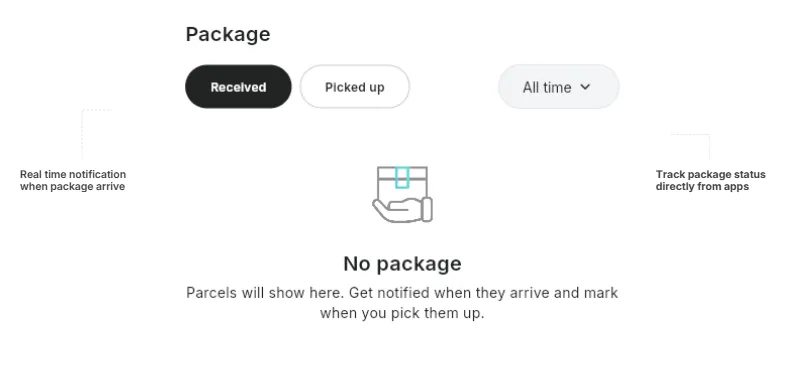
Define a process that is secure and easy to understand. Tenants should know how to register a visitor, how staff verify access, when notifications are sent, and how packages are recorded and collected.
Service evidence: Visitor notification, approval status, arrival time, package notification, and handover history.
8. Renewal or move-out
Many operators communicate with tenants only when the lease is about to end. Conversations about satisfaction and tenant needs should start earlier.
Ask what is working well, what problems keep recurring, which features are most useful, and what would make the tenant stay longer. When a tenant moves out, use exit feedback to identify issues that may never have been submitted as an official complaint.
Service evidence: Renewal reminder, obligation summary, inspection schedule, deposit-return process according to policy, and feedback record.
A simple tenant journey map example
Use the following example as a starting point. Adapt it to the property type and internal rules.
Move-in
Tenant expectation: A clear and timely process
Friction to investigate: Schedule or access is uncertain
PIC: Admin/BM
Service evidence: Checklist and confirmation
First bill
Tenant expectation: Easy-to-understand breakdown
Friction to investigate: Cost components are confusing
PIC: Billing/Admin
Service evidence: Invoice and history
Damage report
Tenant expectation: Report is received and followed up
Friction to investigate: Tenant does not know the status
PIC: Tenant relations/Engineering
Service evidence: Report number and status
Facility booking
Tenant expectation: Schedule is visible and conflict-free
Friction to investigate: Double booking
PIC: Facility/BM
Service evidence: Booking confirmation
Package collection
Tenant expectation: Fast and secure notification
Friction to investigate: Package is difficult to track
PIC: Reception/Security
Service evidence: Package history
Renewal
Tenant expectation: Clear options and information
Friction to investigate: Management contacts tenant too late
PIC: Admin/Leasing
Service evidence: Reminder and feedback
How to audit the journey in seven days
On day one, choose one tenant type and define the eight moments you want to map. On days two and three, conduct short interviews with three to five tenants and two operational team members. Do not ask only, “Are you satisfied?” Ask when they last had to repeat a question, wait for an update, or look for information across more than one channel.
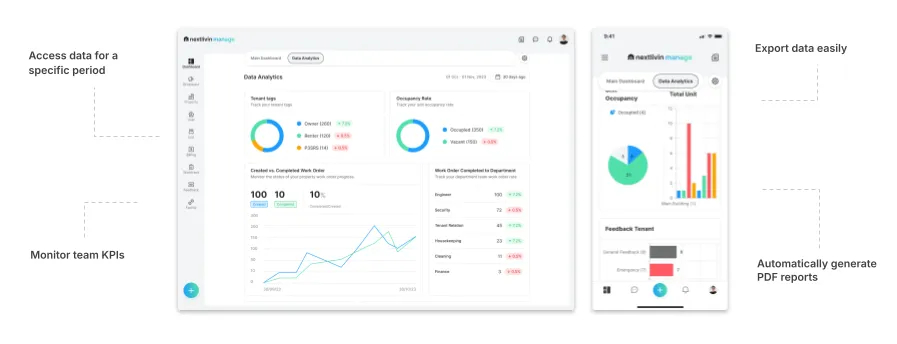
On day four, compare the answers with complaint, billing, facility-booking, visitor, package, and work-order data. On day five, mark frequent friction in red, friction without a PIC in yellow, and processes with clear service evidence in green.
On day six, choose one small improvement to test. Examples include sending a maintenance report number, creating a move-in checklist, or adding facility-booking confirmation. On day seven, measure whether repeated questions, response time, or incomplete reports have changed.
How Nextlivin supports the tenant journey
A tenant journey map becomes more accurate when tenant and team activities are recorded in a traceable workflow. Through Nextlivin Manage for Team, operators can connect work, reports, communication, and team follow-up in a more structured way.
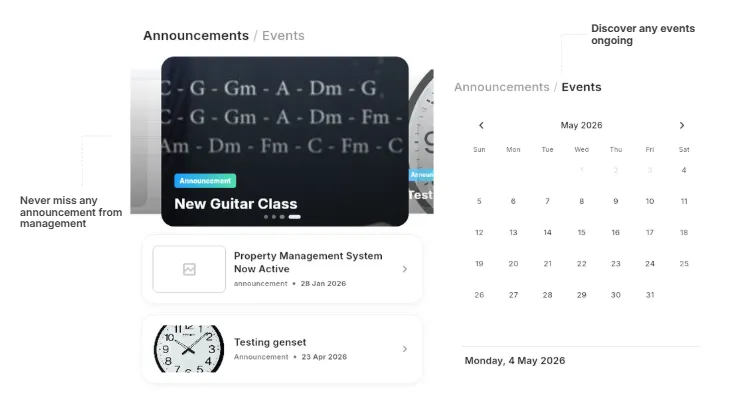
The Nextlivin Features page also maps product capabilities across Data Management, Work Process, Reporting, and Tenant Experience. Connect features to the appropriate moment: Feedback for reports, Billing for charges, Facility for bookings, Broadcast for information, Visitor for guest access, and Package for delivery notifications.
The goal is not to insert every feature into every interaction. The goal is to help tenants understand what to do, receive updates, and find service evidence without repeating the same question.
Conclusion
The tenant experience is shaped by a series of moments, not by one facility or one conversation. A tenant journey map lets management see the process from the tenant’s perspective: what they expect, where friction occurs, who is responsible, and what service evidence should be available.
Start with eight simple moments, run a seven-day audit, and improve one friction point first. When Feedback, Billing, Facility, Broadcast, Visitor, Package, and Worktrack processes are more organized, operators have a stronger basis for building a consistent tenant experience.
Map one tenant journey this week, then compare the result with the Nextlivin Manage for Team workflow to see which part can be made more structured.
References
Want to create a more consistent tenant experience?
Jadwalkan demo gratis hari ini! 📞 0818-958-899 🌐 www.nextlivin.com