by

Property complaints often arrive from several directions: tenant WhatsApp messages, front-desk calls, security logbooks, email, and private messages to technicians. The problem is not only volume. Without a shared way to prioritize, everything looks urgent and the team works based on whoever follows up most often. A property complaint priority matrix helps each report receive a clear impact level, owner, and next action.
A practical answer is an impact-versus-urgency matrix. It is not a replacement for an emergency procedure, but it gives the team a consistent basis for deciding what should happen next.

Separate impact from urgency
Impact asks how large the disruption is: one unit, one floor, a public area, or a core building service. Urgency asks how quickly action is needed: can it wait until the next technician slot, or could the situation worsen within minutes?
| Category | Example | First action |
|---|---|---|
| High impact, high urgency | Lift outage, active leak in a public area, main access disruption | Escalate under the emergency procedure and assign an owner immediately |
| High impact, lower urgency | Unstable shared-area air conditioning, recurring facility disruption | Set a repair plan, vendor schedule, and update rhythm |
| Low impact, high urgency | A small defect that may injure users or damage an asset | Make the area safe and schedule fast action |
| Low impact, low urgency | Cosmetic repair or non-critical request | Place it in the queue and group it with similar work |
Use one record format for every channel
Each report should enter the same work record even when its original source is different. Use: time received, channel, area or unit, issue, impact, urgency, owner, status, next update time, and next action.
- Time received: shows how old the report is.
- Area or unit: keeps technicians from searching through incomplete messages.
- Status: use consistent choices such as new, verified, scheduled, in progress, waiting for vendor, and completed.
- Next update: tells the tenant when new information will arrive.
A building example
Imagine three reports arriving in the same morning: a corridor light is out, one tenant’s air conditioning is weak, and there is an active leak near the lobby. The corridor light may have medium impact, the air-conditioning issue may affect one unit, while the active leak has high impact and can damage assets or create a slip hazard. The matrix helps the team make the leak safe and assign a technician first while still giving the other two reports an owner and update time.
Review the matrix twice a day
Priorities change. Schedule a short review at the start and end of each shift to identify reports without an owner, unchanged statuses, vendor dependencies, and recurring issues. If a status has not moved, the next decision should be explicit: escalate, change the schedule, add resources, or explain the situation to the tenant.
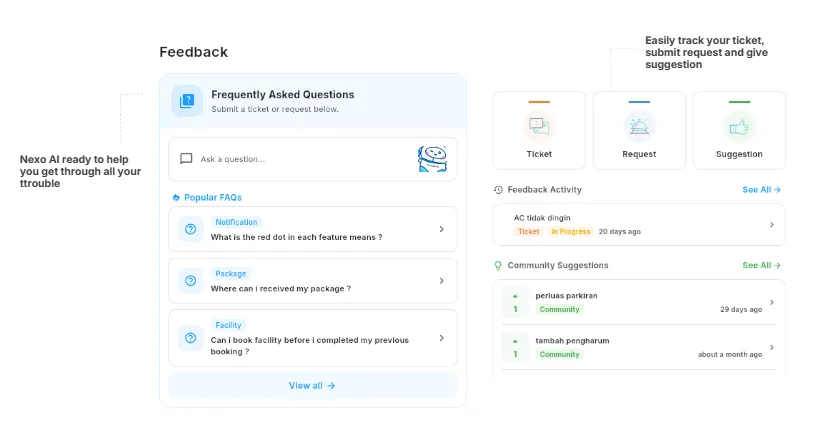
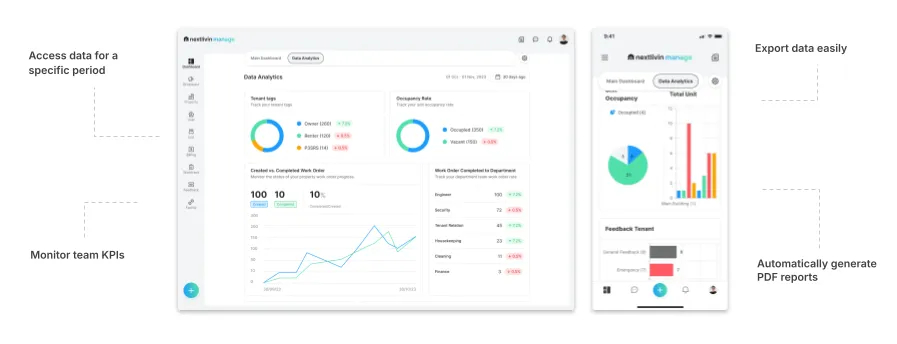
Teams can use Nextlivin Team to connect feedback, work, owners, statuses, and history. The Feedback-to-work-order process then does not stop in an inbox. See the Nextlivin features to understand how data, work processes, reporting, and tenant service can be connected. For the official building-management context, consult PP Nomor 16 Tahun 2021 tentang Bangunan Gedung; adapt it to your property’s procedures, house rules, and operating conditions.
Start with one week of complaint data. Do not wait for a perfect system. The minimum is simple: every report needs a priority, owner, status, and next action.
Schedule a free demo today! 📞 0818-958-899 🌐 www.nextlivin.com