by

A year-end operations review is often thrown together in the final weeks of December — relying on the team's memory of "what seemed to go wrong this year" rather than data actually logged throughout the year. But the last quarter, which has just begun, is actually the ideal moment to start building it.
Why a Memory-Based Review Is a Problem
A team's memory of a full year of operations tends to skew toward whatever was most dramatic or most recent, not the pattern that actually occurred most often. Small, recurring issues rarely make it onto the radar, even though — added up over a year — they're often what consumed the most team time.
This lines up with what's found in the practice of routine work reporting: from reports collected consistently over several months, a company can discover that a certain task always gets delayed during the same period each month — a pattern that's nearly impossible to see if a review only relies on year-end memory, but becomes obvious once the data has actually been tracked along the way.
What Actually Needs Reviewing in the Last Quarter
1. The complaint pattern across the whole year, not just the latest one. Which complaint category comes up most often? Is there a seasonal pattern — say, an AC complaint spike during hot months, or a leak spike ahead of rainy season?
2. Average resolution time, and its trend across the year. Is complaint time-to-close improving, or getting worse compared to earlier quarters?
3. Vendor performance across the life of the contract. Which vendor has stayed consistently on time, and which one's pattern shows more delays as the contract approaches renewal?
4. Collection rate and tenant payment delays. Is there a specific unit or period that's consistently problematic, or is it scattered, case-by-case?
5. Team workload relative to the number of units managed. Is the team already stretched thin handling current volume, or is there still capacity for next year's growth?
Why the Last Quarter, Not December
Building the review in the last quarter — instead of waiting for the final week of December — leaves room to actually analyze nine months of real data, while there's still time to act on what's found before the year truly ends. If it turns out one vendor's performance has been steadily declining, for instance, there's still time to start re-evaluating that contract before it auto-renews at the start of next year.
The Problem: This Data Is Often Not in an Analyzable Form
A data-driven review sounds ideal, but it becomes nearly impossible if a year's worth of operational data is scattered across many files, logged in different formats by different people, or partly lost due to staff turnover partway through the year.
How to Start a Data-Driven Review From Right Now
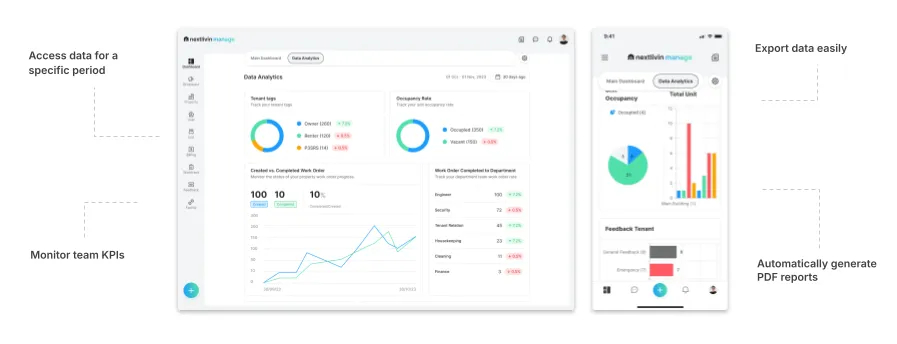
You don't need a perfect system to start — just make sure operational data from now until year-end gets logged consistently in one place, so next quarter's review doesn't run into the same problem. Nextlivin for Teams' Dashboard and Generate Report automatically pull together daily operational data throughout the year, so when the last quarter arrives, the review is simply a matter of analyzing data that already exists — not rebuilding it from memory and scattered files. This continues the same spirit behind our article on building online reputation: a building with clean data for its own internal review is usually also the one best prepared to answer questions from the outside, because there's nothing left to guess at.
Want to start this final quarter with genuinely clean operational data? Schedule a free demo today!
📞 0818-958-899 🌐 www.nextlivin.com