by

Industry Insight
Energy efficiency has become one of the highest priorities in modern residential and commercial building management. As operational costs continue to rise, Building Managers are expected to implement more sustainable, efficient, and data-driven energy management strategies.
For many years, monitoring electricity, water, and other utility consumption has relied heavily on manual inspections and periodic meter readings. This approach often leads to delayed detection of energy waste, limited visibility into consumption patterns, and unnecessary operational expenses that could otherwise be prevented.
By implementing an Energy Monitoring System (EMS), Building Managers can monitor energy consumption in real time, identify usage trends, detect abnormalities, and make informed decisions based on accurate data. Beyond reducing utility costs, EMS significantly improves the overall efficiency of building operations.
What Is an Energy Monitoring System (EMS)?
An Energy Monitoring System (EMS) is a digital solution designed to continuously monitor, record, and analyze energy consumption throughout a building.
The system collects data from multiple sources, including electrical panels, energy meters, HVAC systems, pumps, lighting systems, and other mechanical and electrical equipment. This information is then displayed through intuitive dashboards, enabling Building Managers to monitor performance and evaluate energy usage more effectively.
Benefits of EMS for Building Management
Real-Time Energy Monitoring
Building Managers gain continuous visibility into energy consumption without relying on manual inspections.
Early Detection of Energy Waste
Unexpected increases in electricity or utility usage can be identified immediately, allowing corrective actions before costs escalate.
Lower Operational Costs
Accurate energy data enables management teams to optimize consumption, improve efficiency, and reduce utility expenses.
Support for Preventive Maintenance
Abnormal energy consumption often indicates equipment deterioration or malfunction, allowing maintenance teams to resolve issues before failures occur.
Support for Sustainability Goals
Efficient energy management contributes to environmentally responsible building operations while helping organizations achieve sustainability objectives.

Feature Highlight
EMS Delivers Greater Value When Integrated with Property Management Systems
Energy monitoring becomes significantly more powerful when integrated with a comprehensive Property Management System such as Nextlivin.
Centralized Operational Dashboard
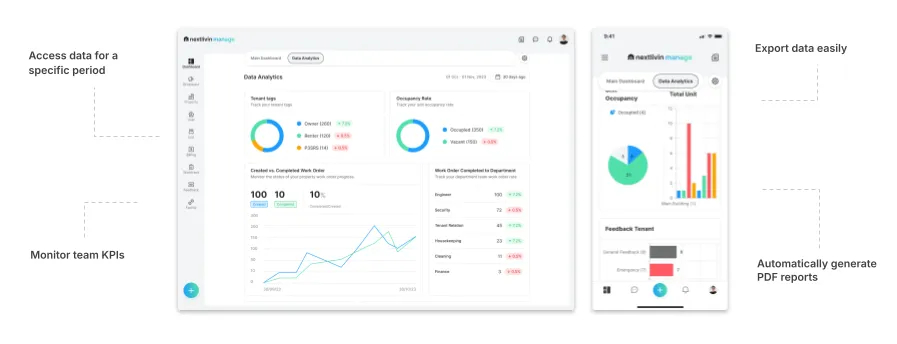
Energy consumption data can be displayed alongside operational information, providing Building Managers with a complete overview of building performance.
Integration with Worktrack
When abnormal energy usage is detected, maintenance work orders can be created immediately through Worktrack, allowing technical teams to inspect and resolve issues without switching between multiple systems.
Asset Performance Monitoring
Historical energy consumption can be linked to equipment performance, helping management evaluate asset efficiency, maintenance history, and replacement planning.
Comprehensive Operational Reporting
Energy usage, maintenance activities, operational performance, and asset management data can be analyzed together to support more informed decision-making.
Data-Driven Management
Instead of relying on assumptions, management teams can use real operational data to prioritize maintenance, optimize investments, and develop long-term energy-saving strategies.
By integrating EMS with Nextlivin's Property Management System, organizations create a smarter, more transparent, and highly efficient operational environment.
News Update
The rapid adoption of the Internet of Things (IoT) has accelerated the implementation of Energy Monitoring Systems in modern residential and commercial buildings.
Smart sensors now automatically collect and transmit utility consumption data, enabling Building Managers to monitor building performance remotely and respond quickly to operational issues.
At the same time, growing awareness of operational efficiency and environmental sustainability has encouraged more property management companies to integrate EMS with cloud-based building management platforms.
This integrated approach not only reduces utility costs but also improves maintenance planning, strengthens operational reliability, and supports strategic decision-making across the entire property.

Conclusion
An Energy Monitoring System (EMS) is no longer simply a tool for measuring electricity consumption—it has become an essential component of modern building management.
By providing real-time energy monitoring, identifying waste, and delivering actionable operational insights, EMS enables Building Managers to control utility expenses while improving overall building performance.
When integrated with a comprehensive Property Management System like Nextlivin, EMS becomes even more valuable. Energy data can be connected directly to maintenance workflows, asset management, operational dashboards, and data-driven decision-making.
In today's digital property industry, intelligent energy management is about more than reducing electricity consumption—it is about building smarter, more efficient, and more sustainable operations that are prepared for the future.

This Article is provided by Nextlivin, for more information about how Nextlivin can help manage your property efficiently, please kindly visit our site.