by EngageBay
Tenant data access control at many buildings is often looser than anyone realizes — a staff member who resigned months ago can still log in, or every team member has full access to data they don't actually need to see.
Controlling access to personal data isn't just best practice — it's a legal obligation. Indonesia's Law No. 27 of 2022 on Personal Data Protection requires every data controller — including a building management team storing tenant personal data — to restrict access to authorized parties only, alongside a requirement to report a data breach incident within a maximum of 3x24 hours if one occurs.
Many buildings only start thinking about access control after an incident — when it should really be a routine question, not a reaction after it's too late. Nextlivin's User Management feature lets managers set access based on each team member's role, so not everyone automatically has access to everything — in line with the principle we cover in data that should live in a system, not depend on one person.
How confident would you be if asked right now, "who exactly can access tenant data in your building"? Share in the comments — curious how many buildings already have a confident answer to that.
Schedule a free demo today!
📞 0818-958-899 🌐 www.nextlivin.com
Tenant package management that isn't organized doesn't just overwhelm the front desk — it carries real risk, from spoiled food to packages going missing before the owner even picks them up.
A global survey found that apartment residents are 30% more likely to have a package stolen than residents of standalone houses — likely due to a much higher package volume combined with a handoff process that involves a third party (front desk or security staff) rather than going straight to the recipient.
1. Log every package the moment it arrives — including the recipient's name, destination unit, and time received.
2. Send an automatic notification to the tenant as soon as the package arrives — don't wait for the tenant to ask.
3. Separate packages by type — food or perishable packages need different handling and pickup priority than ordinary parcels.
4. Set a storage time limit and send a reminder if a package hasn't been picked up after a certain period.
5. Log proof of handoff when the package is finally picked up — not just handed over with no record.
Most package problems aren't about front desk staff dropping the ball on receiving — they're about the tenant simply not knowing the package has arrived. Once there's an automatic notification, the gap between "package received" and "package picked up" shrinks significantly — and that gap is exactly what determines whether food is still edible or already spoiled.
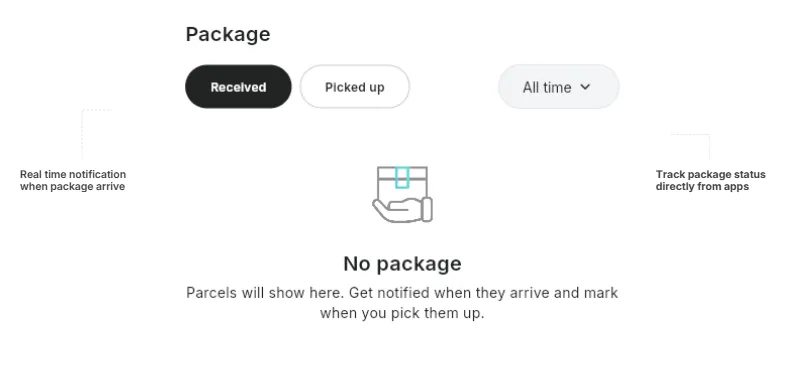
Nextlivin's Package feature logs every incoming package and immediately notifies the relevant tenant, complete with a status flag if a package hasn't been picked up within a set window — so the building team can follow up before it's damaged or considered lost.
Schedule a free demo today!
📞 0818-958-899 🌐 www.nextlivin.com
Tenant feedback that doesn't get answered quickly doesn't just frustrate one person — the fallout can spread much further than expected.
According to commonly cited customer service data, about 61% of customers may switch to a competitor after a bad customer service experience, and share that bad experience with an average of 16 other people. In a building context, "switching to a competitor" means a tenant not renewing their lease — and those "16 other people" could mean a negative review read by other prospective tenants.
A tenant reports something once, no response. They ask again over WhatsApp, get told "we're checking on it." They ask a third time before anything actually happens. By that point, trust has already eroded — not because the problem itself was unsolvable, but because the process felt unstructured from the tenant's point of view.
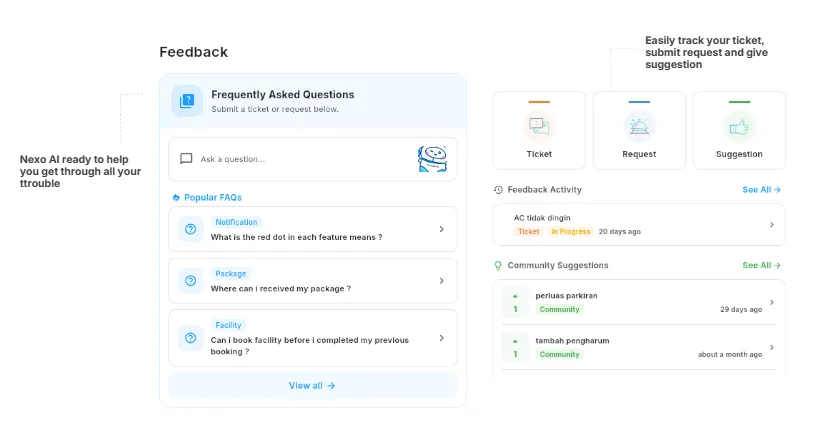
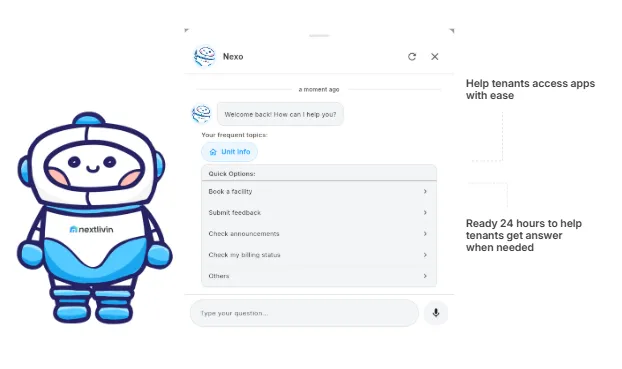
Tenants aren't always upset because the problem itself is big — often they're upset because they don't know whether their report was actually received and is being worked on. Nextlivin's Feedback feature makes sure every tenant report gets logged with a clear status, so tenants don't have to ask again just to confirm their report wasn't lost. For routine, informational questions, NEXO AI can answer first without the tenant waiting for the team to be online — filtering out simple questions before they even reach the team.
How many times, on average, does a tenant in your building have to ask before actually getting an answer? Share in the comments — we're curious how this pattern looks in other buildings.
Schedule a free demo today!
📞 0818-958-899 🌐 www.nextlivin.com
Building announcements about scheduled power outages, elevator repairs, or changes to facility hours often get sent through the tenant WhatsApp group — and often get buried under dozens of other messages within hours.
A WhatsApp group isn't a structured one-way communication channel. Research on WhatsApp communication quality in the workplace found that text message communication quality has a significant effect on work effectiveness — indicating that an unstructured channel measurably reduces how effectively a message lands, not just a matter of preference. For important building announcements, that means messages meant for every tenant end up buried in neighbor-to-neighbor chatter.
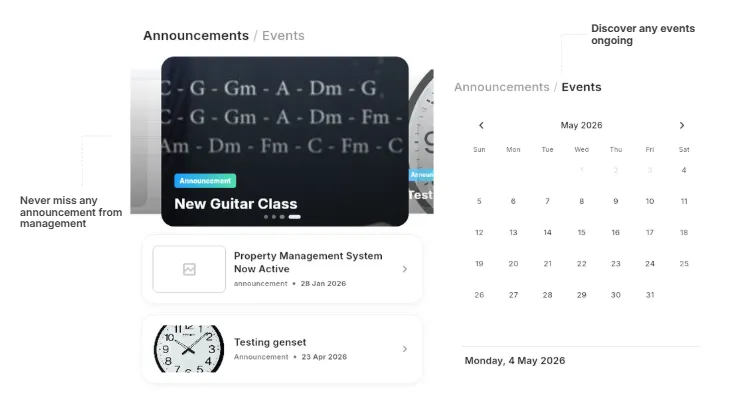
This is exactly what Nextlivin's Broadcast feature is built to solve — announcements arrive as a dedicated notification instead of getting buried in personal chat, and the building team gets a record of who's actually received the information. It's the same approach we cover in our rainy season readiness checklist — announcements like a drainage cleaning schedule or an electrical system check are only effective if they actually reach every tenant, not just get sent.
Schedule a free demo today!
📞 0818-958-899 🌐 www.nextlivin.com
Building Google reviews are likely being read by prospective tenants long before they ever contact your marketing or building management team. The problem is that most building managers never actually monitor what's written there.
Google reviews aren't just about the numeric rating. According to academic research on online review influence, more than 80% of consumers now read online reviews before making a decision. For office buildings or apartments, these reviews are often the first source of information a prospective tenant checks before ever reaching out to the marketing team directly.
Negative reviews are rarely about the building's design or location — they're almost always about the operational experience: slow complaint response, confusing parking systems, or a perceived lack of transparency. These are all things that are actually preventable on the operations side, not the physical building itself.
Most building management teams focus on handling complaints that come in through WhatsApp or in person, but rarely does anyone routinely monitor and respond to Google Maps reviews. Yet a review left unanswered signals that the complaint was never followed up on — not just to the one tenant who complained, but to everyone who reads that review afterward.
The cheapest first step: monitor reviews regularly and respond professionally, including to negative ones — not to argue, but to show the feedback was heard. The more fundamental step: make sure the root causes behind common complaints (slow response, unclear documentation) are actually fixed at the operational level, not just smoothed over in the review section.
A building with organized administration — for example, keeping essential building documents properly stored — is usually also better positioned to answer prospective tenant questions with confidence, since there's nothing to hide. A system like Nextlivin for Teams helps make sure complaints get genuinely resolved before they ever turn into a public negative review.
Schedule a free demo today!
📞 0818-958-899 🌐 www.nextlivin.com


Dapatkan free trial untuk menggunakan Nextlivin selama 14 hari!
Enter contact details to access and download our report
Enter your contact details to access and download our report