by EngageBay
Running a building with spreadsheets, logbooks, and scattered group chats feels "good enough" — until one day complaints get mixed up, invoices get missed, and tenant data disappears somewhere. That's the point when many managers start considering property management software.
But before switching, almost every manager asks the same questions. Here are honest answers to eight of them.
Yes, as long as your building has things to manage: tenants, billing, reports, and schedules. Smaller buildings actually benefit more in relative terms, because their teams are small — every hour lost to administrative work hurts more. The right system scales to you; you don't have to use every feature from day one.
It depends on data volume, but it's usually faster than people expect. Tenant, unit, and outstanding billing data for a mid-sized building typically migrates in days, not weeks or months. The key: start with the data you use most, rather than trying to move every archive at once.
This is the most common concern — and the answer is: modern systems are designed for non-technical users. A security officer who logs guests in a paper book doesn't need months of training to use a digital visitor log app. What matters more is clear internal flow about who does what, not the staff's technical sophistication.
Usually yes, and that's actually an advantage: tenants can access bills, report issues, and receive announcements directly from their own phones. User reviews on platforms like Capterra show this category growing steadily in recent years, in line with tenants' increasing reliance on their phones.
This is a question you should ask back to every vendor. Minimum questions: is data access limited by role? Is there a trail of who accessed what data? Does the vendor understand Indonesia's personal data protection obligations? With the country's data protection law in force, tenant data security is no longer a premium feature — it's a legal requirement.
Most modern systems are designed multi-building. Even managers running several buildings with different processes can configure those differences within one system — no more separate spreadsheets per building. This is often the main migration reason: one standard across all properties.
No — software replaces repetitive work, not people. Automatically sent invoices replace administrative hours, not administrative staff. And with routine work reduced, your team gains time for what has been neglected: following up complaints, preventive inspections, and tenant communication.
Simple: add up measurable costs — hours spent on administrative work, repeated complaints from miscommunication, late-sent invoices — and compare them to the subscription cost. Most managers find the break-even point comes sooner than expected, mainly because time savings often go uncounted at the start.
Doubt before switching is healthy — it's a sign you're serious. What's not healthy is staying for years with a system that clearly makes your team work slower than it should. Start with one small step: see how Nextlivin helps building teams manage daily operations, and decide whether your building is ready to work in a tidier way.
Choosing between cloud and on-premise building management software is a decision that shapes your operations for years, not just a line item on a budget. Here's how the two compare before you commit.
On-premise means the software and its data live on servers owned and managed by your own building, typically maintained by an internal IT team. Cloud means the software is accessed over the internet, with data hosted by the provider and accessible from anywhere. According to Capterra's overview of property management software, most modern solutions in this category are now cloud-based because of how much easier they are to deploy and maintain.
On-premise typically requires a large upfront investment — servers, licenses, installation — but lower ongoing monthly costs. Cloud flips that: little to no upfront hardware investment, but a recurring subscription fee. For a mid-sized building, the cloud model is usually easier on cash flow since there's no large capital outlay required at the start.
This is the most commonly misunderstood point. On-premise is often assumed to be "safer" simply because the data sits on-site, but its actual security depends entirely on how seriously the internal team maintains it — patches, backups, firewalls. A well-run cloud provider often has more consistent security standards and automated backups, simply because that's their core business.
Cloud wins clearly here — teams can access the system from a phone or laptop anywhere, which matters for building managers overseeing more than one property. Adding new units, buildings, or users is also far faster on a cloud system than on an on-premise setup that requires physical server upgrades.
For mid-sized buildings without a large internal IT team, cloud is almost always the more practical choice — no server maintenance, automatic feature updates, and more predictable costs. This lines up with the shift we cover in why building managers are switching to integrated software in 2026.
Nextlivin itself was built cloud-first — see how Nextlivin for Teams lets building managers access their data from anywhere without running their own servers.
Schedule a free demo today!
📞 0818-958-899 🌐 www.nextlivin.com
Picture this: it's ten o'clock at night, and a building manager is still hunched over a laptop, flipping between five different Excel files just to figure out which tenants haven't paid rent this month. One file for tenant data, another for invoices, another for the maintenance schedule of the 12th-floor AC unit, another for complaints that came in through a personal WhatsApp chat, and one more that—somehow—has become a jumbled mix of everything because a staff member forgot to save it in the right folder. Sound familiar?
If it does, you're far from alone. This is the daily reality for thousands of building, apartment, and commercial property managers across Indonesia who still rely on a combination of Excel, WhatsApp, and human memory to manage assets worth billions of rupiah. And this is exactly why property management software has shifted from a "nice to have" into an urgent necessity in 2026. It's not just a trend to follow—it's a direct response to operational pressure that has become impossible to handle manually.
In this article, we'll break down why this shift is happening now, what's actually changing on the business and technology side, which features a modern building management app absolutely needs, and how to choose the right system without getting distracted by features that look impressive in a demo but never get used in real life.
Suggested image: a photo of a building manager in a control room monitoring a digital dashboard — alt text: "property management software Indonesia for building managers"

Before diving into the big reasons behind this shift, it's worth aligning on what this term actually means, because many people still assume property management software is just "an app for tracking rent."
Property management software is an integrated digital system that helps property managers—whether they oversee office buildings, apartments, shophouses, industrial parks, or residential complexes—manage the entire operational cycle from a single platform. Its scope goes far beyond simple rent tracking: it covers tenant and contract management, automated billing, facility maintenance tracking, financial reporting, and resident communication. This term is often used interchangeably with building management app, although technically "building management" tends to focus more on physical facilities (elevators, AC systems, security), while property management covers the business and administrative side more broadly.
What's making this topic increasingly hard to ignore isn't just that the technology is new—it's that Indonesia's property market itself has reached a point that's pushing managers to change, whether they're ready or not.
Before talking about solutions, it's worth being honest about the problems that the industry has long accepted as "just how things are."
First, fragmented data. Tenant information lives in one place, payment history in another, and resident complaints pour in through a WhatsApp group that's a mix of business and casual chatter. When a building owner asks for this month's occupancy report, the management team has to manually pull data from multiple sources—a process that's not only time-consuming but also prone to errors.
Second, delayed billing and revenue leakage. Without an automated system, invoices are often issued late, payment follow-ups rely on staff memory, and late fees aren't applied consistently. The impact shows up directly in cash flow.
Third, reactive rather than preventive maintenance. Technical teams only spring into action after a damage report comes in, instead of following a scheduled maintenance plan. The result is ballooning repair costs and equipment that wears out faster than it should.
Fourth, rising tenant expectations. Today's building and apartment residents are used to fast, app-based service for everything—from ordering food to paying electricity bills. They expect the same when dealing with property management: filing complaints through an app instead of calling security, checking invoices anytime instead of waiting to be billed manually.
The combination of these four problems is what makes the old operational model increasingly difficult to sustain, especially as a property portfolio continues to grow.

There's a solid reason why conversations around property digitalization feel far more urgent this year compared to previous years, and it isn't just coincidental timing.
Property analysts project the sector will enter a moderate recovery phase in 2026, driven by macroeconomic stability and deepening digitalization trends (Indopremier). Developers and managers who adapt quickly to digitalization are expected to become the dominant players in the market going forward, while AI-driven PropTech adoption is projected to become a new industry standard.
On the building operations side, research from Colliers Indonesia's Real Estate Management Services team highlights that PropTech adoption has become a key differentiator for real estate players (My Home Magz). Conventional operating models are increasingly struggling with limited data visibility caused by fragmented workflows and manual reporting processes—the exact same problems we covered in the section above.
Even on the energy efficiency side, implementing IoT sensors and data analytics in buildings has been reported to significantly cut costs and energy consumption, while also reducing equipment downtime through earlier detection of potential failures (Samudera Indonesia Insights). This shows that property digitalization isn't just about tidier administration—it has a direct impact on building operating costs.
In short: 2026 has become a turning point because three forces are converging at once—tighter operational cost pressure, rising tenant expectations, and Indonesian proptech that has matured enough to be adopted without the heavy upfront investment it once required.
Now let's get into the core of it: the concrete reasons why building managers—from small operators to large portfolios—are ultimately deciding to make the switch to a digital system.
The reason cited most often by building managers is the sheer amount of time saved. Tasks that used to take hours—payment reconciliation, compiling occupancy reports, checking which contracts are about to expire—can now be done in minutes because all the data lives in one interconnected system. Management teams can redirect the time they used to spend on administrative busywork toward more strategic priorities, like improving tenant satisfaction.
This is one of the benefits that's most often overlooked until managers actually experience it firsthand. With a good building management app, property owners no longer have to wait for a monthly report to know how their business is doing. Occupancy rates, rental income, payment status, and maintenance schedules can all be checked anytime from a dashboard—even from a phone while traveling. Decision-making becomes much faster because there's no need to wait for a manual data-gathering process across departments.
One of the benefits that shows up fastest on financial statements is invoice and payment reminder automation. The system can send invoices on time, remind tenants before due dates, and consistently apply late fees without manual intervention every month. The result: fewer late payments and less revenue leakage caused by human error.
Modern property management software allows recurring maintenance—AC servicing, elevator inspections, electrical system checks—to be scheduled automatically before damage actually occurs. This preventive approach has been shown to reduce unexpected repair costs while extending equipment lifespan, compared to waiting for residents to report a breakdown.
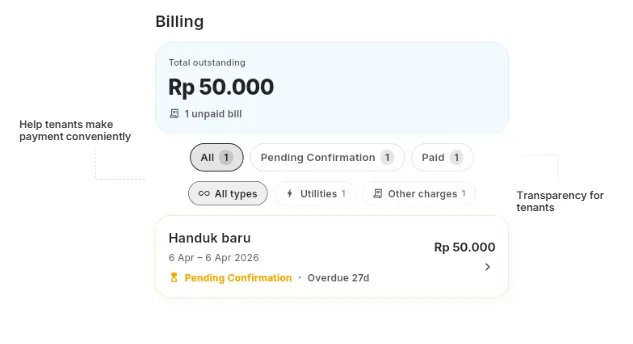
Today's tenants are used to handling things through an app, not phone calls or in-person visits to the management office. Property management software typically includes a dedicated tenant portal or app for filing complaints, checking invoices, renewing contracts, and paying rent online. A smooth experience like this directly impacts tenant retention—and happy, retained tenants are far more profitable than constantly having to find new ones.
For commercial buildings or estates managed by professional teams, the ability to show a clean audit trail—who paid what, when, and for what—becomes especially valuable when dealing with investors, auditors, or during asset sale due diligence. A digital system automatically stores transaction history, far more reliably than a stack of Excel files that can easily be overwritten or lost.
Managing one building with Excel might still be manageable. But once a portfolio grows to five, ten, or dozens of properties, the manual approach starts to collapse under its own weight. Property management software is built to handle that growing scale without requiring a proportional increase in administrative staff—which is exactly why fast-growing property management companies tend to make the digital switch earlier rather than later.
To make this more concrete, let's walk through a scenario that's common among mid-sized building managers in Indonesia—let's say a property management company overseeing three apartment towers with more than 600 units in total.
Before switching to a digital system, their team relied on three administrative staff just to handle manual billing and payment tracking. At the end of every month, the reconciliation process took several days because payment data was scattered across bank accounts, physical receipts, and Excel records that weren't always in sync. Late payments were often only discovered two or three weeks after the fact, since there was no automated reminder system in place.
After switching to an integrated building management app, billing now runs automatically every month, payment reminders are sent out on their own, and financial reports can be accessed in real time by management without waiting for a manual recap. The team that used to be buried in administrative work can now focus on higher-value tasks, like tenant relations and occupancy growth strategy.
This scenario isn't a special case—it's a pattern that repeats across many building managers who have already migrated to digital systems, regardless of the size of the portfolio they oversee.
And if there's still a management team out there proudly saying "we still do things manually, it feels more personal"—let's be honest, that's not personal, that's just not having gotten around to migrating the data yet. Excel isn't a strategy. It's a coping mechanism dressed up as tradition.
When building managers in Indonesia start shopping for property management software, they're usually faced with two broad choices: go with an established international solution like AppFolio, Buildium, or Yardi, or choose a local Indonesian proptech player that understands the local context.
International solutions typically stand out for their feature maturity and global user base. Local solutions, however, have an advantage that's often underrated: alignment with the language and workflows of Indonesian users, easier integration with local tax and banking systems, and faster technical support because the support team operates in the same time zone and language (DOTERB). For mid-sized building managers who need a system that can adapt to specific workflows—like invoice formats that comply with local tax regulations—the customization flexibility offered by local vendors often becomes the deciding factor.
There's no universally correct answer here. What matters is matching your building's operational needs with the respective strengths of each type of vendor, rather than simply picking the most well-known name.
To avoid picking the wrong system, here are the core features a building management app should ideally have in 2026:
With so many options on the market, it's important to have a clear evaluation framework before making a decision. Here are a few things worth considering:
First, map out the biggest operational pain point that's been causing the most trouble—whether it's billing, maintenance, or tenant communication. Prioritize a system that solves that problem well, rather than one with the most features that aren't actually relevant to you.
Second, pay attention to ease of use for field staff, not just management. Even the most sophisticated system is useless if security personnel or technicians on the ground struggle to operate it day to day.
Third, check the system's ability to grow alongside your business—can it handle new units or properties without requiring a complete re-migration from scratch?
Fourth, ask for a demo using your actual operational data, not just the vendor's sample data. This will reveal whether the system genuinely fits your existing workflow.
Fifth, consider the quality of local technical support, especially response speed during your building's busiest operational hours.
To keep this article grounded rather than overly idealistic, it's worth being honest about the challenges that commonly come up during the migration process.
Migrating data from an old system—especially from inconsistently formatted Excel files—requires extra time and care upfront. Resistance from staff who are used to manual workflows is also common, which is why training and hand-holding during the transition period become critical to successful adoption. On top of that, some users still have lingering concerns about digital data security, particularly around financial and personal tenant information, making vendor security standards an important consideration rather than just a nice-to-have feature.
These challenges are real, but they're generally manageable with a phased migration plan and by choosing a vendor that provides implementation support rather than simply selling a license and walking away.
The shift among building managers toward property management software in 2026 isn't just about following the property digitalization trend that's currently making headlines. It's a direct response to real pressure: operating costs that need to be controlled, tenant expectations that keep rising, and asset management complexity that becomes harder to handle manually as a portfolio grows.
For building managers still getting by on a mix of Excel and WhatsApp, the question is no longer "should we switch to a digital system," but "when should we start, and how much opportunity cost has already been lost by delaying." Amid an increasingly mature Indonesian proptech landscape, managers who adapt earlier are usually the ones who enjoy efficiency gains sooner—an advantage that's hard for competitors to catch up on while they're still busy cross-checking five Excel files at ten o'clock at night.
Suggested image: a property management app dashboard showing occupancy and payment graphs — alt text: "real-time building management app dashboard"
What's the difference between property management software and a building management app? The two terms are often used interchangeably. Property management software generally covers the business and administrative side more broadly (tenants, contracts, finances), while a building management app tends to emphasize physical facility management like maintenance and security. Many modern systems now combine both into a single platform.
Is property management software suitable for small-scale building managers? Yes, especially since most vendors now offer tiered pricing plans based on the number of units managed. Even managers overseeing just one or two buildings can benefit from more efficient billing and reporting right from the start.
How long does migration to a digital system usually take? It depends on data volume and property complexity, but basic migration—including tenant and contract data entry—can typically be completed within a few weeks if done in phases with support from the vendor's implementation team.
Is financial and tenant data safe when stored in cloud-based software? As long as the vendor follows clear security standards like data encryption and role-based access control, cloud-based storage is generally far more secure than Excel files scattered across various laptops and personal staff emails.
As a property manager, you're always looking for ways to reduce costs. After all, every dollar saved goes straight to your bottom line. But with so many different expenses to manage, it can be tough to know where to start.
That's where a property management application can come in handy. These tools can help you automate tasks, streamline processes, and track your spending, all of which can lead to significant cost savings.
Here are just a few ways that a property management application can help you reduce costs:
Property management applications can automate a wide range of tasks, from tenant screening to rent collection to maintenance requests. This can free up your time so you can focus on more important things, like growing your business.
For example, a property management application can automatically send out tenant reminders, process rent payments, and create work orders for maintenance requests.
This can save you hours each week, which can translate into significant cost savings.

Property management applications can also help you streamline your processes. For example, a property management application can help you manage your tenant application process, lease agreements, and move-in/move-out inspections.
By streamlining your processes, you can reduce the amount of time and money you spend on administrative tasks.
This can free up your resources so you can focus on more important things, like providing excellent customer service to your tenants.
[Read more: How To Choose The Right Property Management Company]
Property management applications can also help you track your spending. This can help you identify areas where you can cut costs.
For example, a property management application can help you track your rental income, expenses, and cash flow.
This information can help you make informed decisions about your business, such as whether or not to raise rents or invest in new properties.

Let's say you manage a 10-unit apartment building. You're currently spending 10 hours per week on administrative tasks, such as tenant screening, rent collection, and maintenance requests.
If you implement a property management application, you can automate many of these tasks. This could save you up to 5 hours per week.
At a rate of $20 per hour, this would save you $100 per week, or $5,200 per year.
In addition to saving you time, a property management application can also help you streamline your processes and track your spending. This can lead to even more cost savings.
A property management application is a powerful tool that can help you reduce costs in a number of ways. By automating tasks, streamlining processes, and tracking your spending, you can save significant time and money.
If you're looking for ways to reduce costs, we highly recommend considering a property management application.
This article is provided by Nextlivin. For more information on how Nextlivin can assist you in efficiently managing your property, visit our website.
Don't forget to follow us on Instagram, Facebook, Twitter, Linkedin, TikTok for more content.
Juggling the demands of property management can feel like a constant circus act. You're keeping track of tenants, fielding maintenance requests, chasing rent payments, and somehow finding time to sleep in between.
There's a better way.
A property management application can be your secret weapon, streamlining operations, saving you time, and boosting your bottom line. Let's dive a little more!
A property management app is a software tool, typically accessible through a smartphone app or web interface, that helps landlords and property managers streamline all aspects of managing their properties. Imagine it as a digital all-in-one toolbox for everything rental-related.
Here are some of the key benefits property management apps offer:
Overall, property management apps are designed to make your life easier and your properties run more smoothly.
Here's why you should seriously consider investing in one:
Imagine a world where tasks that used to take hours can be completed with a few clicks. Property management apps automate many of the most tedious chores, like:
Property management apps transform you into an organizational whiz. They allow you to:
A property management app isn't just about making your life easier. It also enhances the tenant experience:
By investing in a property management app, you're not just making a technological upgrade, you're making a strategic investment in the success of your rental properties.
If you're a property manager looking for ways to improve your efficiency and productivity for success, then you may be ready to invest in a property management app.
Nextlivin is a fully integrated property management app designed to make your job as a property manager easier!
Nextlivin offers advanced features that can help you:
To start a free trial or schedule a meeting with our team, please call 0818-958-899 or visit our homepage!
Want to learn more about Nextlivin? See our feature page to learn more about the benefits Nextlivin offers!

Ready to take control and free up your valuable time? Research property management apps today and discover how they can revolutionize the way you manage your properties.
This article is provided by Nextlivin, For more information on how Nextlivin can assist you in efficiently managing your property, visit our website. Don't forget to follow us on Instagram, Facebook, Twitter, Linkedin, TikTok for more content.
Apartment complexes are unique microcosms of community living, where various individuals coexist in shared spaces. To ensure a peaceful and well-organized environment, it's essential for apartment complex managers to establish and enforce a set of policies. In this blog, we will discuss essential policies for apartment management that should be considered, focusing on creating a safe, comfortable, and harmonious community.
A top priority for any apartment complex is the safety and security of its residents. A comprehensive security policy should encompass access control, surveillance, and emergency procedures. Ensure that residents and staff are aware of these protocols to enhance overall safety.
A well-defined lease agreement is the cornerstone of a successful apartment complex. It should cover important aspects such as rent payment schedules, maintenance responsibilities, and rules regarding pets, smoking, and noise levels. By clarifying expectations upfront, you can avoid potential conflicts.

Regular maintenance and prompt repairs are vital for the upkeep of the property and the satisfaction of your tenants. Implement a policy that outlines the process for submitting maintenance requests and specifies the expected response times for different types of issues.
Noise disturbances can lead to tenant dissatisfaction and conflicts. Establish noise control policies that designate quiet hours, limit noisy activities, and provide a clear procedure for addressing noise complaints.

If you allow pets in your apartment complex, create a pet policy that covers pet registration, size restrictions, and rules for pet owners. Include guidelines for waste disposal and responsible pet ownership to maintain a clean and pleasant environment.
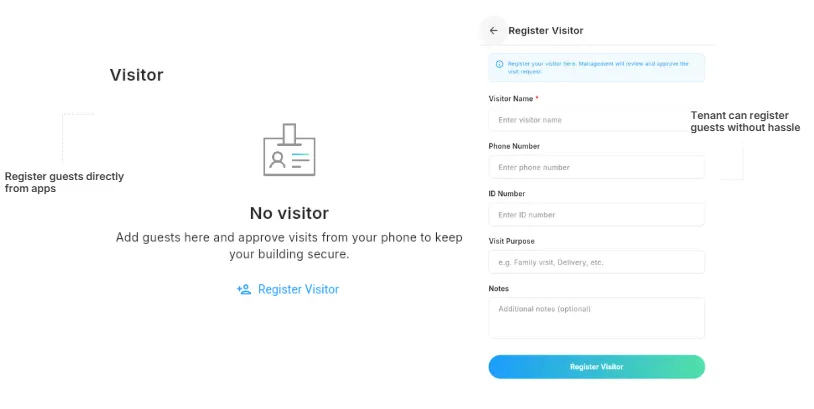
Guest policies should address issues like visitor parking, guest registration, and the maximum duration of guest stays. Balancing the comfort of residents with the rights of guests is essential to maintain a sense of security and community.
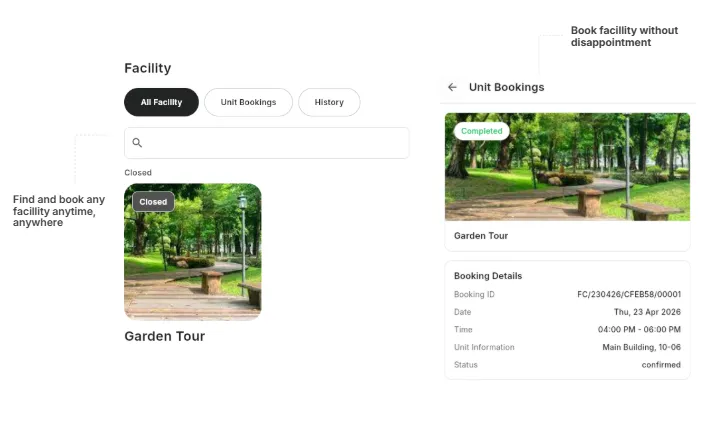
Clearly define the rules for using common areas such as swimming pools, gyms, and lounges. These policies should cover hours of operation, reservation systems, and cleanliness expectations.

A policy for rent collection and late fees helps streamline the financial aspects of apartment management. Specify rent due dates, acceptable payment methods, and the consequences of late payments.
In conclusion, effective apartment complex management policies create a stable and enjoyable living environment for both tenants and property managers. By implementing and enforcing these policies consistently, you can foster a sense of community and ensure the smooth operation of your apartment complex.
Remember, while creating and enforcing policies is essential, flexibility and empathy are also crucial for maintaining positive relationships with your tenants. Striking the right balance between firmness and understanding will contribute to the long-term success of your apartment complex.
Remember to keep your apartment management policies transparent, easily accessible to all residents, and subject to regular review and updates to adapt to changing needs and circumstances 😉
This article is provided by Nextlivin, For more information on how NextLivin can assist you in efficiently managing your property, visit our website. Don't forget to follow us on Instagram, Facebook, Twitter, Linkedin, TikTok for more content.
Working from home has become the new normal, reshaping not just our work lives but also how we view our homes. Tenants are seeking new things, and wanting virtual views of homes, and property managers are finding smart ways to meet these needs. In this blog, we'll learn how to embrace remote work in property management. Let's dive into the changes happening in property management due to the rise of remote work.

The pandemic might have been the initial push, forcing us to rethink traditional work models, but the benefits of remote property management go far beyond mere necessity. It's a potent cocktail of increased efficiency, happier employees, and cost savings for both companies and residents. Think about it:
But wait, there's more! Remote work doesn't mean abandoning your residents to the whims of virtual chatbots. Here's how to keep things personal and connected:

Ready to ditch the office and embrace the remote life? Here are some tips for a smooth transition:
Remote work in property management is no longer a fad, it's a powerful trend reshaping the industry. From happier employees and engaged residents to improved efficiency and cost savings, the benefits are undeniable. So, grab your laptop, put on your comfiest PJs, and join the virtual revolution. The future of property management is remote, and it's looking bright.
Remember, this is just a starting point. Feel free to expand on specific sections, add personal anecdotes or examples from your own experience, and sprinkle in some humor to keep your readers engaged.
Most importantly, have fun with it! Welcome to the remote side, property managers – the work's still getting done but without the commute and fluorescent flicker. Now, pass the virtual coffee, please!
This article is provided by Nextlivin. For more information on how Nextlivin can assist you in efficiently managing your property, visit our website.
Don't forget to follow us on Instagram, Facebook, Twitter, Linkedin, TikTok for more content.
Imagine you're managing a large portfolio of properties, facing daily challenges like handling tenant complaints, tracking rent payments, and ensuring proper property maintenance. Well, by embracing technology, you can overcome these challenges with cost-effective and time-saving solutions.
Embracing technology in property management offers a variety of benefits:
Technology can automate repetitive tasks, such as rent payments and maintenance tracking, so property managers can focus on more strategic tasks.
Technology can improve communication with tenants, allowing them to easily report problems, track the status of their requests, and make rent payments online.

Technology can help property managers make better decisions about rent prices, preventive maintenance, and energy conservation.
Here are some steps that property managers can take to embrace technology:

A property management company that manages multi-unit apartments decided to implement a cloud-based property management system. This system allows them to manage all aspects of their operations online, including collecting rent, tracking maintenance, and communicating with tenants. The system has improved their operational efficiency, increased tenant satisfaction, and reduced operating costs.
Technology has changed the world of property management, and property managers who don't embrace technology will struggle to compete. By strategically leveraging technology, property managers can improve efficiency, increase tenant satisfaction, and increase profitability.
Embrace technology is not about following the latest trends, but about finding the right solution for your specific needs and leveraging it to improve your business performance. With a strategic approach and effective implementation, property managers can lead in the digital era and achieve sustainable success.
This article is provided by Nextlivin, For more information on how NextLivin can assist you in efficiently managing your property, visit our website. Don't forget to follow us on Instagram, Facebook, Twitter, Linkedin, TikTok for more content.
Developers, are you tired of juggling spreadsheets, chasing contractors, and drowning in tenant concerns? Welcome to Nextlivin, the app designed to turn property management from a chore to a breeze. Forget clunky software and siloed data – Nextlivin is your one-stop shop for developer bliss.
Here's how Nextlivin can transform your property management game:


Nextlivin is more than just a property management application. It's a strategic partner that empowers you with the tools and insights you need to:
Ready to ditch the spreadsheets and embrace a smarter, simpler way to manage your properties? Try Nextlivin today and experience the difference.
Visit our homepage or contact us for a free demo and discover how Nextlivin can take your property management to the next level.
Don't just manage your properties, thrive with Nextlivin!
This article is provided by Nextlivin, For more information on how NextLivin can assist you in efficiently managing your property, visit our website. Don't forget to follow us on Instagram, Facebook, Twitter, Linkedin, TikTok for more content.
Imagine you're managing a large portfolio of properties, facing daily challenges like handling tenant complaints, tracking rent payments, and ensuring proper property maintenance. Well, by embracing technology, you can overcome these challenges with cost-effective and time-saving solutions.
Embracing technology in property management offers a variety of benefits:
Technology can automate repetitive tasks, such as rent payments and maintenance tracking, so property managers can focus on more strategic tasks.
Technology can improve communication with tenants, allowing them to easily report problems, track the status of their requests, and make rent payments online.
Technology can help property managers make better decisions about rent prices, preventive maintenance, and energy conservation.
Here are some steps that property managers can take to embrace technology:
A property management company that manages multi-unit apartments decided to implement a cloud-based property management system. This system allows them to manage all aspects of their operations online, including collecting rent, tracking maintenance, and communicating with tenants. The system has improved their operational efficiency, increased tenant satisfaction, and reduced operating costs.
Technology has changed the world of property management, and property managers who don't embrace technology will struggle to compete. By strategically leveraging technology, property managers can improve efficiency, increase tenant satisfaction, and increase profitability.
Embrace technology is not about following the latest trends, but about finding the right solution for your specific needs and leveraging it to improve your business performance. With a strategic approach and effective implementation, property managers can lead in the digital era and achieve sustainable success.
This article is provided by Nextlivin, For more information on how NextLivin can assist you in efficiently managing your property, visit our website. Don't forget to follow us on Instagram, Facebook, Twitter, Linkedin, TikTok for more content.
Picture this: You're a property manager, juggling a million tasks, from chasing down rent checks to scheduling maintenance appointments to ensuring a positive relationship with all your tenants. It's enough to make your head spin.
But what if there was a way to make all of that easier?
A property system is a comprehensive software solution designed to streamline and optimize the management of all types of properties, from residential apartments and commercial buildings to industrial complexes and retail spaces.
Well, it's like having a superpowered personal assistant who can handle all the nitty-gritty stuff that takes up your precious time. Think tenant management, financial accounting, handling complaints and requests – you name it, your property system can handle it.

Property system eliminates the need for manual data entry and record-keeping, automating repetitive tasks and streamlining workflows.
This automation frees up valuable time for property managers, allowing them to focus on strategic initiatives and building stronger relationships with tenants.
This system also provides a centralized platform for accessing real-time information, including maintenance records, financial statements, and tenant communication logs. This transparency ensures that all stakeholders are kept informed, fostering trust and collaboration.
Property system facilitates seamless communication between property managers, tenants, and maintenance personnel, enabling prompt issue resolution and fostering a sense of community within the property.

By optimizing resource allocation and preventing costly mistakes, property system helps property managers reduce operational expenses and maximize profitability.
Property system empowers tenants with self-service options, streamlined communication channels, and real-time access to property information, enhancing their overall experience and satisfaction.
By optimizing operations, reducing costs, and fostering tenant satisfaction, PMS contributes directly to increased property value and return on investment.
There are lots of different property management systems out there, so it's important to choose the one that's right for you. Here are a few things to think about:
If you're a property manager looking for ways to improve your efficiency and productivity, then you may be ready to invest in a property system.
Nextlivin is a fully integrated property system designed to make your job as a property manager easier!
Nextlivin offers advanced features that can help you:
To start a free trial or schedule a meeting with our team, please call 0818-958-899 or visit our homepage!
Want to learn more about Nextlivin? See our feature page to learn more about the benefits Nextlivin offers!
With a property system on your side:
This article is provided by Nextlivin, For more information on how NextLivin can assist you in efficiently managing your property, visit our website. Don't forget to follow us on Instagram, Facebook, Twitter, Linkedin, TikTok for more content.
As a property manager, you're always looking for ways to reduce costs. After all, every dollar saved goes straight to your bottom line. But with so many different expenses to manage, it can be tough to know where to start.
That's where a property management application can come in handy. These tools can help you automate tasks, streamline processes, and track your spending, all of which can lead to significant cost savings.
Here are just a few ways that a property management application can help you reduce costs:
Property management applications can automate a wide range of tasks, from tenant screening to rent collection to maintenance requests. This can free up your time so you can focus on more important things, like growing your business.
For example, a property management application can automatically send out tenant reminders, process rent payments, and create work orders for maintenance requests.
This can save you hours each week, which can translate into significant cost savings.
Property management applications can also help you streamline your processes. For example, a property management application can help you manage your tenant application process, lease agreements, and move-in/move-out inspections.
By streamlining your processes, you can reduce the amount of time and money you spend on administrative tasks.
This can free up your resources so you can focus on more important things, like providing excellent customer service to your tenants.
[Read more: How To Choose The Right Property Management Company]
Property management applications can also help you track your spending. This can help you identify areas where you can cut costs.
For example, a property management application can help you track your rental income, expenses, and cash flow.
This information can help you make informed decisions about your business, such as whether or not to raise rents or invest in new properties.
Let's say you manage a 10-unit apartment building. You're currently spending 10 hours per week on administrative tasks, such as tenant screening, rent collection, and maintenance requests.
If you implement a property management application, you can automate many of these tasks. This could save you up to 5 hours per week.
At a rate of $20 per hour, this would save you $100 per week, or $5,200 per year.
In addition to saving you time, a property management application can also help you streamline your processes and track your spending. This can lead to even more cost savings.
A property management application is a powerful tool that can help you reduce costs in a number of ways. By automating tasks, streamlining processes, and tracking your spending, you can save significant time and money.
If you're looking for ways to reduce costs, we highly recommend considering a property management application.
This article is provided by Nextlivin. For more information on how Nextlivin can assist you in efficiently managing your property, visit our website.
Don't forget to follow us on Instagram, Facebook, Twitter, Linkedin, TikTok for more content.
Imagine being able to automate your property management tasks, make better decisions, and improve the tenant experience, all with the help of AI.
Artificial intelligence (AI) is rapidly transforming many industries, and property management is no exception. AI-powered software can help property managers with a wide range of tasks, from rent collection to maintenance scheduling and analytics.
In this blog post, we'll discuss how property managers can use AI to improve their business. Keep on reading!
AI can help property managers in a number of ways, including:
AI can automate a wide range of tasks involved in property management, including:

AI can help property managers make better decisions by providing insights into data and trends.
For example, AI can be used to analyze historical data to identify patterns in tenant behavior, which can help property managers to optimize their marketing and leasing strategies.
AI can also be used to predict future trends and events. For example, AI-powered predictive analytics tools can be used to predict which tenants are at risk of moving out or which properties are likely to require major repairs. This information can help property managers to take proactive steps to prevent problems and make better decisions about how to manage their properties.

AI can help property managers improve the tenant experience by providing tenants with self-service options and by proactively addressing maintenance issues. For example, AI-powered chatbots can answer tenant questions and help them to submit maintenance requests.
What are the biggest challenges you face in your property management business? AI can help you to automate tasks, make better decisions, and improve the tenant experience. Once you know what your pain points are, you can start to look for AI-powered solutions that can help you to address them.

Don't try to implement AI for everything all at once. Start by focusing on one or two areas where AI can have the biggest impact. For example, you could start by using AI to automate your tenant screening process or to schedule maintenance requests more efficiently.
It's important to get buy-in from your team before implementing AI in your property management business. Explain the benefits of AI and how it can help them to do their jobs more effectively.
Once you've implemented AI in your property management business, it's important to measure your results. This will help you to see what's working and what's not. You can use metrics such as time saved, money saved, and tenant satisfaction to measure your results.

AI is transforming the property management industry, and property managers who embrace AI will be well-positioned to succeed in the years to come.
AI-powered tools and software can help property managers to automate tasks, make better decisions, and improve the tenant experience. This can free up property managers to focus on more strategic tasks, such as growing their business and providing excellent customer service.
If you're a property manager, I encourage you to explore the different ways that AI can help your business. There are a number of different AI-powered tools and software solutions available, so you can find one that meets your specific needs and budget.
AI is a powerful tool that can help property managers to improve their business in a number of ways. By following the tips above, you can start to embrace AI and reap the benefits.
This article is provided by Nextlivin. For more information on how Nextlivin can assist you in efficiently managing your property, visit our website.
Don't forget to follow us on Instagram, Facebook, Twitter, Linkedin, TikTok for more content.
In today's digital age, property management applications aren't just for landlords and property managers. They've evolved to cater to tenants' needs, offering an array of features that significantly enhance the rental experience. In this blog, we'll be discussing the benefits of property management application for tenants.
One of the primary benefits tenants gain from using property management applications is streamlined communication. With a direct line to property managers or landlords, tenants can effortlessly report issues, seek clarification, or request information.
This enhanced communication channel ensures that concerns are promptly addressed, leading to a more pleasant living experience.
Property management apps often include a secure online rent payment feature, making it remarkably convenient for tenants. Gone are the days of writing physical checks or visiting management offices.
Through the app, tenants can pay rent from the comfort of their homes, and they can even set up automatic recurring payments to ensure timely rent submission.
When a maintenance issue arises, tenants can easily report it through the property management app. This straightforward process allows tenants to provide detailed descriptions of the problem, attach photos for clarification, and track the progress of their requests.
Property managers or landlords can respond swiftly, ensuring that maintenance issues are resolved efficiently.

Property management applications grant tenants access to crucial documents, including lease agreements, move-in checklists, and community rules and regulations. These documents are readily available within the app, empowering tenants to reference them whenever necessary.
This transparency fosters clear communication and understanding.
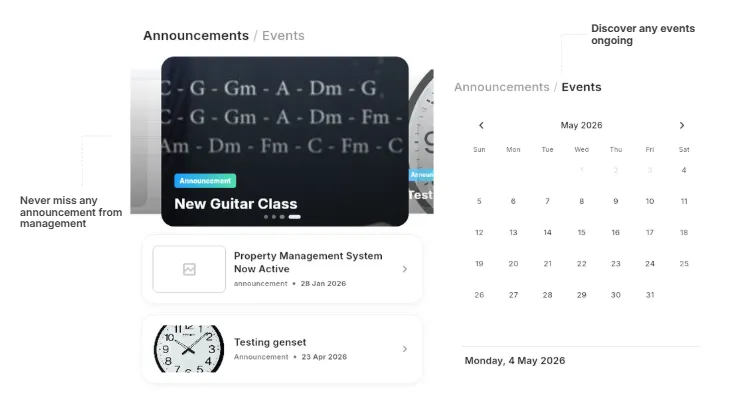
Tenants can receive important updates, news, and announcements through the property management app. Whether it's information about upcoming maintenance work, community events, or policy changes, tenants can stay in the know via the app's notification system.
This keeps tenants informed and engaged within the property community.
Tenants can benefit from the digital record-keeping capabilities of property management apps. It allows them to track rent payments, maintenance requests, and communication history with property managers or landlords. This comprehensive documentation can be invaluable in case of disputes or inquiries.

Property management applications are no longer exclusive to property owners and managers; they offer a wealth of advantages to tenants. From facilitating communication and simplifying rent payments to making maintenance requests painless and providing access to essential documents, these apps transform the rental experience.
By utilizing a property management application, tenants can receive many benefits including enjoying a smoother, more convenient, and more informed journey in their rental properties. Embrace the digital age and explore these apps to elevate your renting experience today.
This article is provided by Nextlivin, For more information on how NextLivin can assist you in efficiently managing your property, visit our website. Don't forget to follow us on Instagram, Facebook, Twitter, Linkedin, TikTok for more content.
In the rapidly evolving world of property management, staying organized and efficient is key to success. Property managers today have a powerful tool at their disposal, property management SaaS (Software as a Service). This cloud-based solution offers a wide range of benefits that can simplify operations, improve tenant relations, and boost overall productivity.
Property Management SaaS is a cloud-based software solution designed to streamline the various aspects of property management. It provides property managers with a centralized platform to handle tasks related to leasing, maintenance, tenant communication, financial management, and more. Instead of traditional software installed on a single computer, SaaS applications are accessible from any device with an internet connection, making it a flexible and efficient choice for property managers.
One of the most significant advantages of property management SaaS is its accessibility. Property managers can access the system from anywhere, at any time, using a computer, tablet, or smartphone.
This means that critical tasks can be managed on the go, and property managers are not tied to a specific location.
SaaS solutions typically have a subscription-based pricing model, eliminating the need for upfront hardware and software costs. Property managers can choose plans that suit their needs, making it a cost-effective option for businesses of all sizes.
With SaaS, software updates and maintenance are handled by the service provider. Property managers don't need to worry about manually installing updates or maintaining server infrastructure, ensuring that they always have access to the latest features and security enhancements.
SaaS often includes collaboration tools, allowing property managers to work seamlessly with their teams and contractors. Real-time communication, document sharing, and task assignment can all be managed within the system.
As your property portfolio grows, SaaS can easily scale to accommodate your needs. You can add more properties, users, and features as your business expands, without the need for major software upgrades.
When selecting a SaaS for your property, it's essential to evaluate the features that align with your specific requirements. Here are some key features to consider:
If you're a property manager looking for ways to improve your efficiency and productivity, then you may be ready to invest in a property management SaaS.
Nextlivin is a fully integrated property management SaaS designed to make your job as a property manager easier!
Nextlivin offers advanced features that can help you:
To start a free trial or schedule a meeting with our team, please call 0818-958-899 or visit our homepage!
Want to learn more about Nextlivin? See our feature page to learn more about the benefits Nextlivin offers!
In conclusion, Saas for property management offers property managers a modern and efficient way to streamline operations and enhance tenant experiences. By choosing the right SaaS solution with features that align with your business needs, you can unlock new levels of efficiency and productivity in property management.
This article is provided by Nextlivin, For more information on how NextLivin can assist you in efficiently managing your property, visit our website. Don't forget to follow us on Instagram, Facebook, Twitter, Linkedin, TikTok for more content.
In our modern world, we're constantly surrounded by apps and software. Some of these applications become our trusted allies, making our lives easier, while others leave us frustrated and confused. Ever wondered what makes the difference? It's all about being "user-friendly." In this blog, let us explore what is meant by user-friendly application and how it will benefit the users.
A user-friendly application is one that prioritizes the needs, preferences, and ease of use of its intended audience. Such applications aim to provide a seamless, intuitive, and enjoyable user experience. It's an application that puts your needs first, making sure you don't have to jump through hoops to get things done.
Here are some traits that make an app user-friendly:
When you look at the buttons, menus, and features, their purpose is clear. You don't have to read or consult a user manual or spend a lot of time figuring out how to use it. A user-friendly app has a design and layout that is intuitive.
In our fast-paced digital world, nobody likes to wait. User-friendly apps are responsive and quick to load. When you tap a button or perform an action, the app responds promptly. Waiting for an app to load or perform tasks is frustrating and can drive users away. User-friendly apps understand that your time is valuable.
From the statistics provided by Truelist, 90% of users stop using an app due to poor performance, 70% of users will find another app if it takes too long to load. This means that it is important to make sure that an app is fast, reliable, and easy to use, you need to optimize your app for speed and performance.

User-friendly apps maintain a consistent design and layout throughout. Whether you're switching between screens or accessing different features, the structure remains familiar. This consistency helps users feel comfortable and confident as they navigate the app.
A user-friendly app has an attractive and visually appealing user interface (UI), making it pleasant to interact with. However, beauty goes beyond aesthetics. It also means that the UI is informative. Icons, labels, and tooltips are used effectively to convey information and guide users.
User-friendly apps comply with accessibility standards and guidelines, ensuring that everyone can use the app without barriers. A user-friendly app is accessible to a wide range of users, including those who are not familiar with using technology.

In summary, a user-friendly application is one that prioritizes the user's experience above all else. It's easy to understand and navigate, responsive and efficient, consistent in design, visually pleasing, and accessible to a diverse audience. Such apps aim to make your digital interactions as seamless and enjoyable as possible, just like a friendly and well-organized gathering where everyone feels at home.
We make our property management application, Nextlivin, a very user-friendly app by offering an experience that is accessible and understandable for users of all ages, including older adults. We understand that technology can sometimes feel daunting, but we've made it our mission to ensure that Nextlivin is not only a powerful property management tool but also a platform that provides comfort and ease of use for a wide range of users.

Here's how Nextlivin goes the extra mile to make property management a breeze for everyone:
1. Clear and Simple Language: Nextlivin is designed with clear and simple language that makes it easy for everyone to understand and use. We've avoided jargon and complex terminology to ensure that every user can navigate the app comfortably.
2. Intuitive Interface: Our app boasts an intuitive interface that simplifies property management tasks. We've designed it to guide users through each step effortlessly, making it a hassle-free experience, even for those who may not be tech-savvy.
3. Larger Fonts and Clear Icons: To aid in readability, Nextlivin features larger fonts and clear icons that are easy to see and interact with.
4. Visual Clarity: Whether it's viewing property listings or checking feedbacks submitted by tenants, we've ensured that everything is presented in a visually accessible and easy-to-read format.
5. Simplified Navigation: Navigating NextLivin is straightforward and hassle-free. Our simplified navigation ensures that even older adults can effortlessly find what they're looking for, eliminating any confusion.
6. Familiarity and Comfort: Nextlivin aims to provide older adults with a sense of familiarity and comfort when managing their properties. We understand that change can be challenging, and our goal is to make property management tasks as familiar and stress-free as possible.
In summary, a user-friendly application is one that prioritizes the user's experience above all else. It's easy to understand and navigate, responsive and efficient, consistent in design, visually pleasing, and accessible to a diverse audience. Such apps aim to make your digital interactions as seamless and enjoyable as possible, just like a friendly and well-organized gathering where everyone feels at home.
This article is provided by Nextlivin, For more information on how NextLivin can assist you in efficiently managing your property, visit our website. Don't forget to follow us on Instagram, Facebook, Twitter, Linkedin, TikTok for more content.


Dapatkan free trial untuk menggunakan Nextlivin selama 14 hari!
Enter contact details to access and download our report
Enter your contact details to access and download our report