by EngageBay
The last five years changed how people work — and directly reshaped the future of office buildings. Hybrid work, where employees split time between home and office, is now standard at many multinational and local companies in Indonesia. For building managers, this is not market news you can watch from a distance; it changes how buildings are used, leased, and judged by tenants.
Global and regional property research reports — such as those published regularly by Colliers Indonesia — consistently show one pattern: demand is not disappearing, it is shifting. Tenants no longer look for "as much space as possible," but for "the space that delivers the most value on office days."
Look at it from the tenant's side. When employees only come to the office three days a week, a company's decisions change fundamentally:
Shifting tenant behavior has concrete consequences for your building's operations:
Utilities are no longer flat. Buildings that used to be steadily busy five days a week now have fluctuating load patterns — Mondays and Fridays can feel like different buildings. This challenges how your team schedules electricity, AC, and cleaning.
Facilities compete with location. When tenants can work from anywhere, buildings compete not just on address, but on experience: how easy it is to book a meeting room, how fast reports are handled, how transparent utility billing is.
Tenant retention gets harder. With more flexible contracts, dissatisfied tenants can move faster. Day-to-day tenant experience — not just the building facade — becomes the deciding factor.
To face this shift, here are realistiow easy it is to book a meeting room, how fast reports are handled, how transparent utility billing is.
Tenant retention gets harder. With more flexible contracts, dissatisfied tenants can move faster. Day-to-day tenant experience — not just the building facade — becomes the deciding factor.
To face this shift, here are realistic steps — no major renovation required:
Every shift opens a gap. Well-managed buildings can actually thrive in the hybrid era: tenants may downsize, but they are more willing to pay for buildings that are demonstrably managed professionally. Management quality — once a minor differentiator — is now one of the main reasons tenants stay.
The future of office buildings is not bleak; it is being filtered. Buildings that adapt to how people work today will remain needed. The rest will keep losing tenants one by one — without ever knowing exactly why.
In property management, many organizations focus primarily on daily operating expenses such as electricity, cleaning services, security, routine maintenance, and other operational costs. However, the largest financial commitment of a building extends far beyond its day-to-day operations.
This is where the concept of Life Cycle Cost (LCC) becomes essential. Rather than evaluating costs based solely on initial investment or short-term savings, Life Cycle Cost considers the total cost of owning, operating, maintaining, repairing, replacing, and modernizing a building throughout its entire lifespan.
For Building Managers, property owners, and facility management teams, understanding Life Cycle Cost supports more informed decision-making by balancing cost efficiency with long-term asset performance, sustainability, and resident satisfaction.
As modern buildings become increasingly sophisticated, managing costs over the entire asset lifecycle has become a key component of successful property management.
Life Cycle Cost (LCC) refers to the total cost incurred throughout the lifetime of a building or asset—from initial planning and construction to operation, maintenance, replacement, and eventual renovation or modernization.
Instead of focusing only on acquisition costs, Life Cycle Cost evaluates the long-term financial impact of every operational decision.
Typical Life Cycle Cost components include:
Costs associated with construction, equipment procurement, system installation, and building infrastructure.
Daily expenses such as utilities, security services, housekeeping, staffing, and routine building operations.
Preventive maintenance, inspections, routine servicing, and repairs that help preserve asset performance and extend equipment lifespan.
Expenses related to replacing aging or underperforming assets such as elevators, pumps, HVAC systems, electrical panels, safety equipment, and mechanical infrastructure.
Investments made to upgrade building systems, improve energy efficiency, comply with regulations, and meet changing resident expectations.
By adopting a Life Cycle Cost approach, property managers can make smarter investment decisions that reduce long-term expenses while maximizing asset value and operational reliability.

Nextlivin provides an integrated Property Management System that enables Building Managers to manage operational data more strategically while supporting long-term asset management.
Track preventive maintenance, inspections, repairs, and operational tasks to ensure building assets remain in optimal condition.
Manage equipment, spare parts, operational inventory, and asset records to improve maintenance planning and replacement decisions.
Monitor operational expenses and financial activities through a more organized and transparent billing system.
Access centralized operational insights that support faster, data-driven decision-making across the entire property.
Maintain complete records of repairs, inspections, and maintenance activities, making it easier to identify recurring issues and evaluate asset performance.
Historical operational data enables management teams to compare recurring repair costs against asset replacement investments, helping optimize future budgeting decisions.
By transforming operational information into meaningful insights, Nextlivin helps property managers view costs not simply as expenses, but as strategic investments in long-term asset performance.
The global property management industry is increasingly adopting data-driven decision-making to improve operational efficiency and maximize asset value.
Building owners and facility managers now recognize that cost efficiency is not merely about reducing today's expenses—it is about extending asset life, minimizing unexpected failures, and optimizing long-term investment returns.
The growing adoption of Smart Buildings, preventive maintenance strategies, sustainability initiatives, and digital asset management has further strengthened the importance of Life Cycle Cost analysis.
Organizations that effectively manage the complete lifecycle of their building assets can reduce major repair risks, improve operational reliability, enhance resident satisfaction, and significantly increase long-term property value.
As the industry continues to evolve, Life Cycle Cost management is expected to become a fundamental strategy for budgeting, maintenance planning, and capital investment decisions.

Life Cycle Cost is one of the most important principles in modern property management because it enables organizations to evaluate the total financial impact of building ownership throughout its entire lifespan.
By considering initial investment, operating expenses, maintenance, asset replacement, and modernization together, Building Managers can make smarter, more sustainable, and financially responsible decisions.
Nextlivin supports Life Cycle Cost management through integrated features including Worktrack, Inventory Management, Billing Management, Operational Dashboards, and comprehensive maintenance history.
With accurate operational data available in one centralized platform, property management teams can reduce unnecessary expenses, improve preventive maintenance strategies, extend asset life, and preserve long-term property value.
Because successful property management is not simply about operating a building today—it is about ensuring that the building continues to perform efficiently, remain financially sustainable, and deliver lasting value for many years to come.

This Article is provided by Nextlivin, for more information about how Nextlivin can help manage your property efficiently, please kindly visit our site.
The property management industry is rapidly embracing digital transformation as operational demands continue to grow. Managing residential buildings, apartments, office towers, and mixed-use developments is no longer effective when relying solely on spreadsheets, messaging applications, paper-based records, or disconnected software.
Today's Building Managers are responsible for overseeing increasingly complex operations, including billing management, resident communication, maintenance coordination, complaint resolution, facility reservations, visitor management, and financial reporting.
As properties continue to expand in both size and complexity, digital adaptation has become more than a technological upgrade—it is a strategic necessity. Modern Property Management Systems enable organizations to streamline operations, improve collaboration, and deliver higher-quality services while remaining competitive in an increasingly digital industry.
Digital transformation enables property management teams to replace inefficient manual workflows with integrated, data-driven processes that improve operational performance.
Some of the most common challenges experienced by traditionally managed properties include:
Resident information, unit records, payment history, maintenance requests, and operational reports are often stored across multiple systems, making it difficult to obtain a complete overview.
Important announcements can easily become buried in messaging groups, causing residents to miss critical updates.
Without a centralized platform, Building Managers often struggle to monitor maintenance progress, staff assignments, and task completion in real time.
Manual invoice generation, payment verification, and financial reporting require significant administrative effort and increase the possibility of errors.
Service requests submitted through different communication channels may be delayed or forgotten if they are not properly documented and tracked.
Digital transformation addresses these challenges by integrating operational processes into a single platform that improves visibility, accountability, efficiency, and service quality.

Nextlivin is a comprehensive Property Management System designed to help Building Managers modernize operations through a fully integrated digital platform.
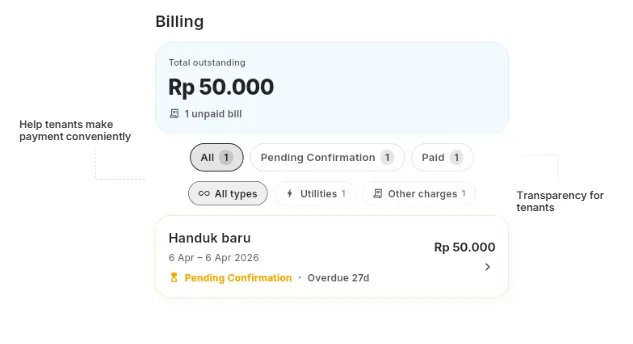
Simplify invoicing, payment tracking, and financial reporting while improving transparency and operational efficiency.
Monitor maintenance activities, assign work orders, track progress, and ensure timely task completion in real time.
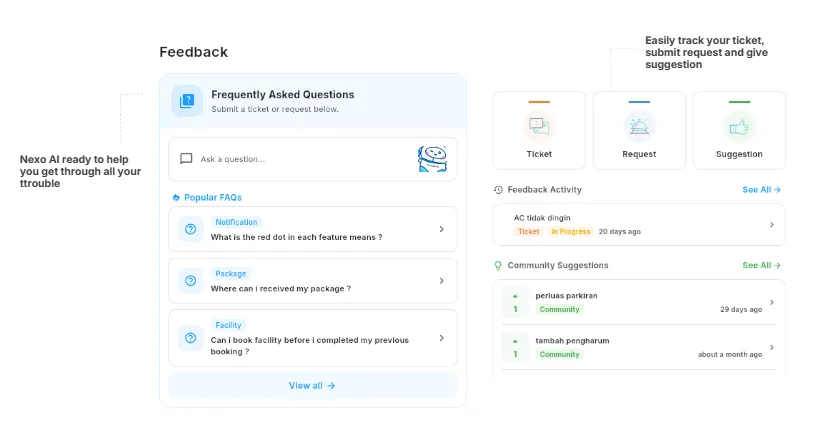
Capture, organize, and monitor resident complaints and feedback to ensure faster response times and greater service accountability.
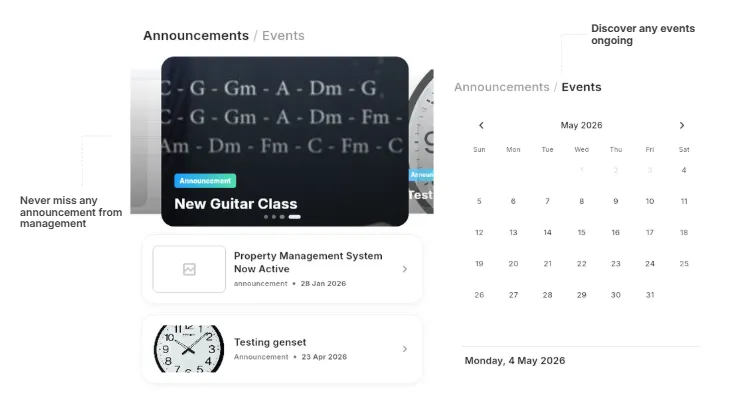
Deliver important announcements instantly to all residents through one centralized communication platform.
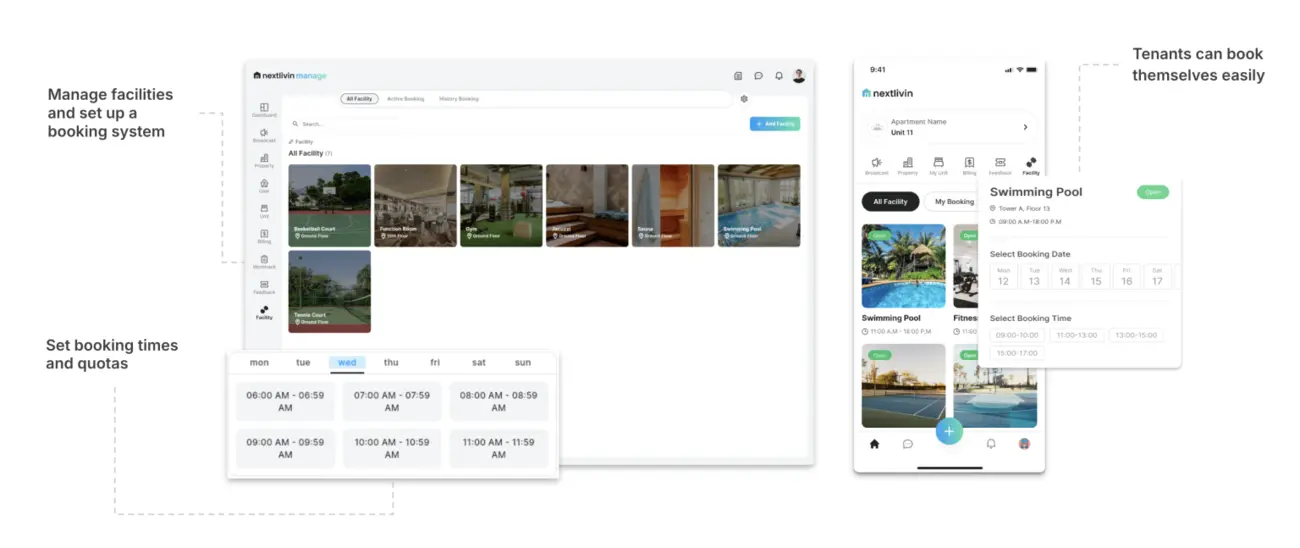
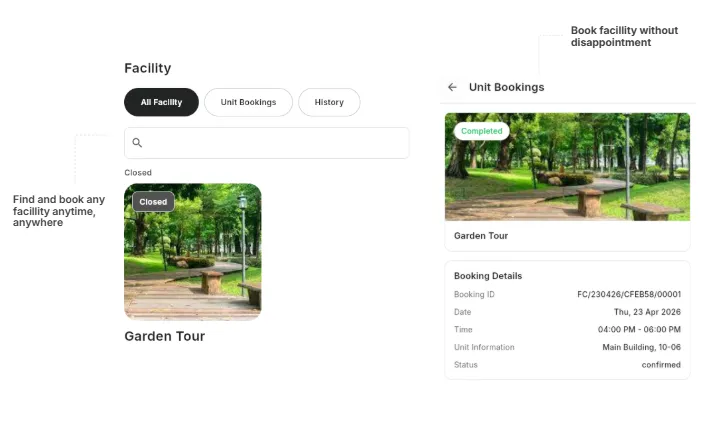
Enable residents to reserve shared facilities through an organized and transparent digital booking system.
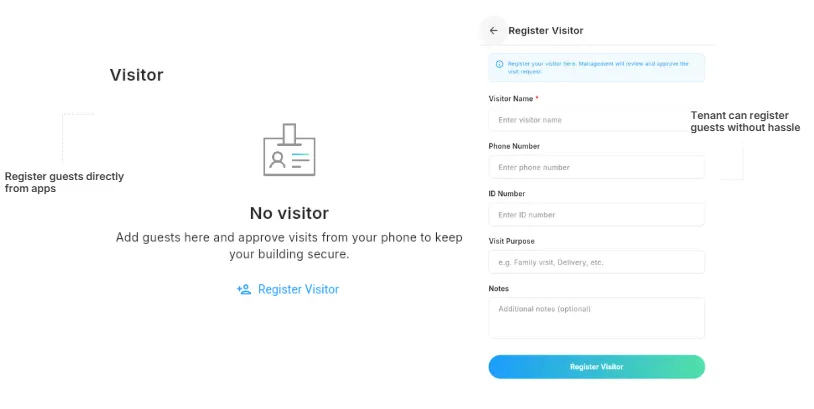
Digitize visitor registration to improve both security and operational efficiency.
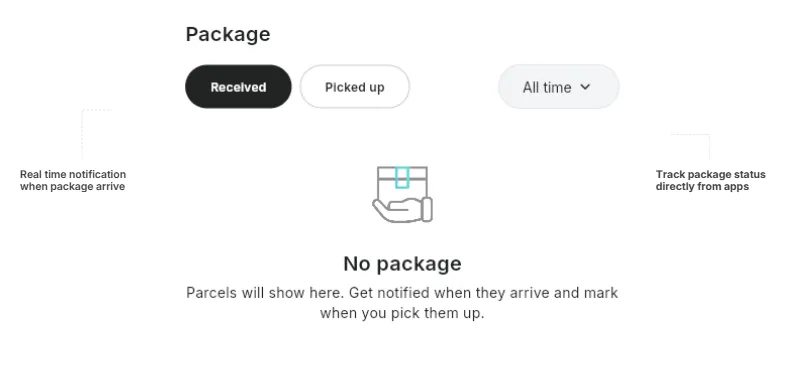
Track incoming deliveries and simplify package distribution with a structured digital process.
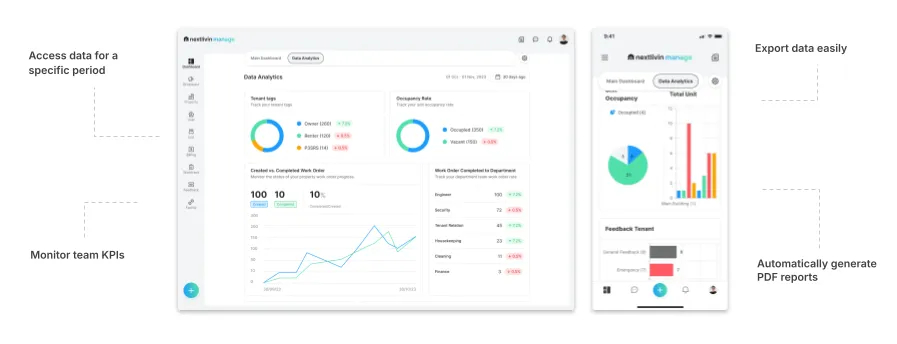
Access key operational insights through a centralized dashboard that supports faster, data-driven decision-making.
By connecting every operational function within one platform, Nextlivin enables property management teams to work more efficiently while delivering a better experience for residents.
Digital transformation continues to reshape the global property management industry as organizations increasingly recognize the limitations of traditional manual operations.
The adoption of Smart Building and Smart Living technologies has accelerated investment in digital solutions that improve operational efficiency, strengthen collaboration, and enhance resident satisfaction.
Modern Property Management Systems are no longer focused solely on automating administrative tasks. They also provide valuable business intelligence through real-time data, performance monitoring, and integrated communication.
Properties that successfully embrace digital transformation are better equipped to respond quickly to operational challenges, improve service quality, and strengthen their long-term competitiveness.
As technology continues to evolve, digital property management is expected to become the standard operating model for residential and commercial developments worldwide.

Digital transformation is no longer an option—it has become an essential strategy for modern property management.
By replacing manual processes with integrated digital solutions, Building Managers can improve operational efficiency, increase data accuracy, enhance team collaboration, strengthen resident communication, and provide higher-quality services.
Through Nextlivin's integrated platform, property management teams can manage billing, work orders, resident feedback, announcements, facility reservations, visitor registration, package handling, and operational monitoring within one centralized ecosystem.
Ultimately, digital transformation is not simply about adopting new technology. It is about creating smarter workflows, improving operational transparency, and delivering exceptional resident experiences.
The future belongs to properties that embrace innovation, and Nextlivin is designed to help property management teams confidently lead that transformation.
This Article is provided by Nextlivin, for more information about how Nextlivin can help manage your property efficiently, please kindly visit our site.
The property management industry continues to evolve as digital technology transforms the way residential and commercial buildings are managed. While many properties once relied on manual processes, paper-based documentation, and disconnected software, an increasing number of organizations are now embracing cloud-based property management systems.
This shift is more than a technological trend—it is a response to increasingly complex operational demands. Building Managers are expected to oversee hundreds or even thousands of units, manage resident services, coordinate maintenance activities, monitor financial performance, and maintain effective communication across multiple departments simultaneously.
With cloud-based technology, operational data becomes accessible in real time through a single integrated platform. This enables faster decision-making, stronger collaboration among teams, and a significantly better experience for residents.
Cloud-based Property Management has become a fundamental component for organizations seeking to improve operational efficiency while delivering modern, high-quality property management services.
Cloud-Based Property Management is a digital property management solution that stores operational data securely in the cloud, allowing authorized users to access information anytime and from anywhere through an internet connection.
Unlike traditional systems that depend on local servers or individual office computers, cloud-based platforms provide secure, centralized access to operational information across multiple devices and locations.
This flexibility enables Building Managers, finance teams, engineering staff, and property administrators to collaborate more efficiently regardless of where they are working.
The growing adoption of cloud technology within the property industry is driven by several key advantages.
Building performance, resident payments, maintenance activities, operational reports, and resident requests can be monitored instantly from virtually any location.
Engineering, housekeeping, resident relations, finance, and management teams all work with the same centralized information, reducing communication gaps and operational errors.
Resident records, unit information, billing data, maintenance history, operational reports, and other critical information are stored securely within one integrated platform.
Real-time dashboards provide Building Managers with immediate operational insights, enabling quicker and more informed decisions.
Management teams are no longer restricted to office computers. Operational monitoring and decision-making can continue seamlessly using laptops, tablets, or smartphones.
By adopting cloud-based technology, property operations become more flexible, efficient, scalable, and ready to support the evolving needs of modern buildings.

Nextlivin is designed as a comprehensive cloud-based Property Management System that enables Building Managers to manage every aspect of property operations through one centralized platform.
Manage invoicing, resident payments, outstanding balances, and financial reporting more efficiently through an integrated billing solution.
Monitor maintenance requests, inspections, preventive maintenance activities, and operational tasks in real time from assignment to completion.
Ensure resident complaints and feedback are properly documented, tracked, and resolved with complete transparency.
Distribute important announcements and building updates instantly to all residents through a centralized communication platform.
Simplify facility reservations with an organized and transparent booking system that minimizes scheduling conflicts.
Digitally manage visitor registrations and package deliveries while improving security, organization, and resident convenience.
Access key operational data through a centralized dashboard that provides valuable insights for faster and more strategic decision-making.
With Nextlivin, every operational process is connected within a secure cloud environment, allowing Building Managers to work more efficiently while delivering exceptional service to residents.
Digital transformation continues to reshape the global property management industry as organizations seek smarter ways to improve operational efficiency and resident satisfaction.
Cloud-based platforms are rapidly replacing traditional on-premise systems because they provide greater flexibility, stronger collaboration, enhanced security, and real-time operational visibility.
The growing adoption of Smart Building and Smart Living concepts has also accelerated investment in cloud technologies that integrate billing, maintenance, communication, facility management, and resident services into one connected ecosystem.
As digital innovation continues to advance, cloud-based Property Management Systems are expected to become the industry standard for modern residential and commercial properties.
Organizations that embrace cloud technology today will be better positioned to improve productivity, enhance resident experiences, and remain competitive in the rapidly evolving property market.

Modern property management requires solutions capable of supporting increasingly complex operational demands.
Cloud-Based Property Management provides the flexibility, accessibility, and operational intelligence necessary to improve efficiency, strengthen collaboration, and deliver better resident services.
Through Nextlivin's integrated cloud platform, Building Managers can manage billing, operational tasks, resident communication, facility reservations, visitor management, package handling, and building monitoring from a single centralized system.
This enables management teams to work faster, make more informed decisions, and provide higher-quality services while simplifying day-to-day operations.
Because the future of property management is not simply about adopting technology—it is about using the right technology to create smarter operations, stronger collaboration, and exceptional living experiences.
And that is exactly what Nextlivin's cloud-based Property Management platform is built to achieve.
This Article is provided by Nextlivin, for more information about how Nextlivin can help manage your property efficiently, please kindly visit our site.
Many residential and commercial buildings constructed decades ago remain operational today. However, as buildings age, various challenges begin to emerge, including rising operational costs, declining energy efficiency, aging infrastructure, and decreasing occupant comfort.
At the same time, constructing a new building is not always the most practical or economical solution. High construction costs, limited land availability, and the need to maintain ongoing operations have encouraged property owners to seek more efficient alternatives.
One solution that has gained significant attention across the property industry is building retrofitting. This approach allows older buildings to improve their performance, functionality, and sustainability without requiring complete reconstruction.
Today, retrofitting has become an essential strategy for property modernization, helping buildings remain competitive while adapting to evolving technologies and increasing occupant expectations.
Building retrofitting is the process of upgrading existing building systems, infrastructure, and facilities to meet modern standards for efficiency, safety, sustainability, and operational performance.
Retrofitting projects may include several areas of improvement, such as:
Replacing conventional lighting with LED systems, installing automated sensors, and improving the efficiency of air conditioning and ventilation systems.
Upgrading electrical panels, pumps, generators, heating, ventilation, and air conditioning systems to improve reliability and performance.
Modernizing fire protection systems, surveillance cameras, access control systems, and other security technologies.
Strengthening building structures to improve resilience against environmental and operational risks.
Integrating modern technologies such as Property Management Systems, digital monitoring platforms, and operational dashboards.
Retrofitting is not merely about repairing aging infrastructure—it is about preparing buildings for the future.
Modern equipment and systems typically consume less energy, helping reduce utility expenses and maintenance costs.
Upgraded systems provide safer, more comfortable, and more efficient living environments for residents.
Retrofitting helps prolong the useful life of a building without the significant expense of complete redevelopment.
Modernized buildings become more attractive to prospective residents, tenants, and investors.
Energy-efficient systems and reduced resource consumption contribute to environmental sustainability initiatives.
Properties that adopt modern technologies and infrastructure upgrades are better positioned to compete in today's property market.

While physical upgrades are an important component of retrofitting, digital transformation is equally essential for modern property management.
Nextlivin helps Building Managers modernize daily operations through an integrated Property Management System.
Streamlines maintenance activities, inspections, preventive maintenance programs, and repair management.
Automates billing processes and reduces repetitive administrative tasks while improving payment monitoring.
Ensures resident feedback and complaints are properly documented, tracked, and resolved efficiently.
Provides a modern and transparent reservation system for shared facilities and amenities.
Offers real-time visibility into building operations, enabling data-driven decision-making and improved management efficiency.
By combining physical modernization with digital transformation, property owners can maximize the value and performance of their assets.
Retrofitting continues to gain momentum worldwide as property owners focus on sustainability, operational efficiency, and asset optimization.
Many organizations now prefer upgrading existing buildings rather than constructing new ones. In addition to being more cost-effective, retrofitting significantly reduces construction waste and environmental impact.
The growing adoption of Smart Building technologies has further accelerated investments in modernizing building systems. Digital tools for energy monitoring, facility management, predictive maintenance, and resident services are becoming increasingly common in both residential and commercial properties.
These trends demonstrate that the future of real estate is not always about building from the ground up—it is also about maximizing the potential of existing assets.

Building retrofitting is a strategic solution for property owners and managers seeking to improve building performance without undertaking costly redevelopment projects.
Through infrastructure upgrades, energy efficiency improvements, enhanced safety measures, and digital transformation initiatives, older buildings can remain competitive and relevant in today's evolving property market.
With technology solutions like Nextlivin, modernization efforts extend beyond physical infrastructure to include operational excellence, resident satisfaction, and data-driven management practices.
The most successful buildings of the future will not necessarily be the newest ones—they will be the buildings that continuously adapt, innovate, and evolve to meet changing demands.
This Article is provided by Nextlivin, for more information about how Nextlivin can help manage your property efficiently, please kindly visit our site.
When choosing an apartment, many tenants focus primarily on location, rental price, or available facilities. However, one critical factor is often overlooked until after moving in—the quality of the apartment management system.
A building may offer luxurious amenities and modern facilities, but without effective management, the overall living experience can quickly become frustrating.
Today, the standard of modern residential living is no longer measured solely by the quality of the building itself. It is also determined by service quality, response times, security, operational efficiency, and the ease with which residents can access various services.
For this reason, tenants should understand how to recognize a well-managed apartment system before making a long-term housing decision.
A professional apartment management system can usually be identified through several aspects that tenants experience in their daily lives.
Professional property management teams maintain clear and effective communication channels.
Information regarding maintenance schedules, utility disruptions, facility repairs, or important announcements should be delivered promptly to all residents.
Tenants should not have to search for critical information on their own. Everything should be communicated transparently and efficiently.
Complaints and maintenance requests are inevitable in any residential community.
What differentiates a well-managed apartment is how these issues are handled.
A professional management system provides clear reporting procedures, trackable work progress, and measurable resolution timelines.
Swimming pools, gyms, function halls, playgrounds, and other shared amenities should always be properly maintained.
In addition, the reservation process for these facilities should be simple and convenient.
The easier it is for residents to access and use building amenities, the better their overall living experience will be.
Security involves more than simply having security personnel on-site.
Visitor management, access control systems, surveillance monitoring, and well-defined security procedures are all indicators of a professionally managed apartment community.
Modern apartment communities are increasingly adopting digital services to improve resident convenience.
From maintenance fee payments and complaint submissions to visitor registration, facility booking, and communication with management, many services can now be accessed through a mobile application.
Digitalization makes processes faster, more transparent, and significantly more convenient for tenants.

Important announcements and updates are delivered quickly to all residents.
Residents can submit issues and monitor resolution progress transparently.
Facility reservations become more practical and efficient.
Access control and monitoring procedures help maintain resident safety.
Multiple resident needs can be managed through a single integrated platform.
The modern residential property market is experiencing growing demand for digital-first living experiences.
Today's tenants are not only looking for apartments with premium facilities; they also expect convenient access to everyday services.
Many property management companies are adopting smart living concepts by utilizing technology to enhance the resident experience.
Digital payments, visitor management systems, online facility booking, and integrated feedback platforms are quickly becoming the new standard in modern property management.
Apartment communities that provide practical, efficient, and technology-driven services are likely to achieve higher resident satisfaction compared to those relying on traditional management methods.

For tenants, choosing an apartment is about more than just the building or its location.
The quality of the management system plays a major role in determining daily comfort and overall satisfaction.
Clear communication, responsive complaint handling, reliable security, well-maintained facilities, and integrated digital services are all hallmarks of professionally managed apartment communities.
The stronger the management system, the better the living experience for residents.
Therefore, before selecting a place to live, take the time to evaluate not only the apartment unit itself but also how the property is managed. Doing so can help ensure a safe, comfortable, and hassle-free living experience for years to come.
This Article is provided by Nextlivin, for more information about how Nextlivin can help manage your property efficiently, please kindly visit our site.
The exchange rate of the Indonesian rupiah is one of the key economic indicators that significantly influences the property industry in Indonesia.
In recent months, the weakening of the rupiah against the US dollar has become a major concern for developers, investors, and property management companies. This situation occurs when more rupiah are required to purchase one US dollar.
Although most property transactions in Indonesia are conducted in rupiah, many components used in construction still rely on imported products, including elevator systems, security equipment, smart building technologies, HVAC systems, specialized construction materials, and various mechanical and electrical components.
As a result, fluctuations in exchange rates can directly affect construction costs and business strategies across the property sector.
The weakening of the rupiah against the US dollar creates several challenges for Indonesia’s property industry.
One of the most immediate impacts is the increase in construction costs. As the value of the dollar rises, imported materials and equipment become more expensive. This forces developers to adjust project budgets for both ongoing developments and future projects.
In addition to construction costs, a weaker rupiah can also influence investment decisions. Investors tend to become more cautious during periods of economic uncertainty and currency volatility.
However, the impact is not entirely negative.
In some cases, property is viewed as a hedge against inflation and currency depreciation. Many investors continue to choose real estate because it is considered a long-term asset that generally offers greater stability than holding cash.
At the same time, a weaker rupiah encourages developers to improve operational efficiency. The adoption of digital technologies, integrated building management systems, and smart building concepts is becoming increasingly important for controlling costs and maintaining profitability.
Digital platforms such as Nextlivin help property managers and building operators improve efficiency through digital billing systems, tenant management, resident communication, and real-time operational monitoring.
In a dynamic economic environment, operational efficiency has become one of the most important factors in maintaining profitability while continuing to deliver high-quality services.

Imported materials and equipment become more expensive as the dollar strengthens.
Investors tend to evaluate economic conditions more carefully before committing capital.
Many investors continue to view real estate as a relatively stable investment vehicle.
Developers and property managers focus more on controlling operational expenses.
Technology helps improve efficiency, productivity, and cost management across property operations.
Despite global economic uncertainties, Indonesia’s property sector continues to demonstrate resilience. Demand for residential properties remains relatively stable, particularly within the middle-income segment and in areas supported by growing infrastructure development.
In addition, property digitalization continues to gain momentum. Developers and building management companies are increasingly investing in technologies that improve operational efficiency while enhancing the resident experience.
Smart building, smart living, and property technology (PropTech) solutions are expected to continue growing as the market adapts to changing economic conditions and evolving consumer expectations.

The weakening of the rupiah against the US dollar presents challenges for Indonesia’s property industry, particularly in terms of construction costs and investment confidence.
However, it also encourages industry players to become more efficient, innovative, and adaptable in response to economic changes.
Property remains one of Indonesia’s most promising long-term sectors, especially when supported by digital transformation and modern operational management practices.
Looking ahead, property companies that successfully combine operational efficiency, technology adoption, and high-quality services will be better positioned to thrive despite the challenges of an evolving global economy.
This Article is provided by Nextlivin, for more information about how Nextlivin can help manage your property efficiently, please kindly visit our site.
Changes in lifestyle and technological advancements have reshaped tenant expectations toward residential living. In the past, location and price were the main considerations. Today, modern tenants prioritize comfort, ease of access to services, and an efficient living experience.
A residence is no longer just a place to live—it has become part of a lifestyle. Tenants expect everything to be accessible quickly, from payments and maintenance services to communication with building management.
This shift encourages property managers to adapt by adopting technology-driven solutions like Nextlivin, which effectively address the needs of today’s tenants.
The type of housing modern tenants need is one that provides both comfort and practicality in daily life. Tenants no longer want to deal with time-consuming manual processes, such as offline payments or non-transparent complaint handling.
Through platforms like Nextlivin, these needs can be addressed within a single digital system. Tenants can easily make payments, submit service requests, and access important information—all through one application.
Transparency is also a key factor. Tenants want to track payment status, maintenance progress, and building updates in real time. This creates a sense of security and builds trust in property management.
With an integrated system, a residence becomes more than just a place to stay—it transforms into an ecosystem that supports comfort and efficiency in everyday living.

Here are some key aspects of an ideal living space supported by Nextlivin:
All tenant needs can be accessed through a single application without complicated processes.
Payments become faster, more convenient, and transparent with an integrated billing system.
Tenants can communicate directly with management through a centralized platform.
Service status and building information can be monitored in real time.
Digitalization creates a more efficient and comfortable residential environment.
The trend in modern housing is moving toward the concept of smart living, where technology plays a central role in supporting daily life. Many apartments and properties are adopting digital systems to enhance tenant experiences.
Nextlivin is part of this transformation by providing a platform that integrates various services into one system.
As tenant expectations for comfort and convenience continue to rise, the use of technology in residential living is expected to grow even further in the future.

The ideal living space for modern tenants is one that delivers comfort, convenience, and transparency in every aspect of daily life.
Nextlivin provides a solution that meets these needs through an integrated system that simplifies interactions between tenants and building management.
By adopting digital technology, a residence becomes more than just a place to live—it becomes a living space that supports productivity and a better quality of life.
This Article is provided by Nextlivin, for more information about how Nextlivin can help manage your property efficiently, please kindly visit our site.
In today’s digital era, property management is no longer reliant on manual methods. Building managers are required to work faster, more transparently, and more efficiently in handling building operations and tenant needs.
Digitalization has become the primary solution to address these challenges. Platforms like Nextlivin serve as innovations that integrate various property management functions into one unified system.
With increasing tenant expectations for fast and convenient services, adopting technology in property management is no longer just an added advantage—it has become a necessity.
Using Nextlivin offers various advantages that are directly experienced by both property managers and tenants.
First, operational efficiency. With an integrated system, various manual processes such as record-keeping, reporting, and communication can be handled digitally, saving both time and effort.
Second, improved transparency. All data and activities can be monitored in real time, from tenant payments to the status of requests or complaints. This helps build trust between management and tenants.
Third, ease of access. Being application-based, all parties can access information anytime and anywhere without location limitations.
Fourth, enhanced tenant experience. Tenants can perform various activities such as facility booking, payments, and communication through a single platform, increasing convenience and satisfaction.

Nextlivin offers a range of powerful features to support digital property management:
1. Integrated Billing System
Managers can manage invoices, send automated notifications, and monitor tenant payments efficiently.
2. Facility Booking Management
Tenants can easily reserve facilities, while managers maintain full control over scheduling.
3. Visitor Management System
Visitor tracking becomes more secure, fast, and well organized.
4. Feedback & Complaint Management
Tenants can easily submit complaints or requests, and management can respond quickly and systematically.
5. Monitoring Dashboard
All key data is available in a single, easy-to-understand dashboard to support better decision-making.
The trend of digitalization in the property industry continues to grow rapidly. Many building managers are transitioning to technology-based systems to improve efficiency and service quality.
In addition, cloud-based platforms enable real-time data access and enhance operational flexibility. This has become one of the main drivers behind the adoption of solutions like Nextlivin across various property types, from residential apartments to commercial buildings.
Looking ahead, property management technology is expected to evolve further with the integration of AI and more advanced automation.

Using Nextlivin provides significant advantages for both property managers and tenants. From operational efficiency and data transparency to improved user experience, everything can be achieved through one integrated platform.
In an increasingly competitive property industry, adopting technology like Nextlivin is not just an option—it is a strategic move to enhance service quality and business competitiveness.
Digitalization is no longer the future—it is the present necessity for modern and professional property management.
This Article is provided by Nextlivin, for more information about how Nextlivin can help manage your property efficiently, please kindly visit our site.
Digitalization is often perceived as a complex, expensive, and time-consuming process. Many businesses, especially in the property sector, still hesitate to begin their digital transformation due to concerns about complicated systems and difficult implementation.
However, technological advancements today have introduced solutions that are increasingly simple and user-friendly. Platforms like Nextlivin prove that digitalization can be implemented practically without the need to overhaul entire systems drastically.
In today’s modern era, digitalization is no longer optional—it has become essential for improving operational efficiency, transparency, and service quality for tenants.
There are many misconceptions about digitalization that cause businesses to delay implementation. One of the biggest assumptions is that digitalization requires complex systems and a large IT team.
In reality, modern digital solutions are designed to be user-friendly and accessible to various levels of users, including building managers, tenants, and operational staff. With application-based systems, manual processes such as record-keeping, communication, and facility management can be handled within one integrated platform.
Moreover, digitalization does not need to happen all at once. Property managers can start with the most essential features—such as billing, visitor management, or facility booking—and gradually expand according to operational needs.
This step-by-step approach makes the transformation process lighter, more measurable, and lower risk.

Digital platforms like Nextlivin offer various features that simplify the digitalization process, including:
1. Integrated Dashboard
All important data such as tenant payments, reports, and building activities can be accessed in one easy-to-understand interface.
2. Automated Billing System
Managers can send invoices, notifications, and payment reminders automatically without manual effort.
3. Organized Facility Booking
Tenants can book facilities independently, while managers maintain full control over schedules and usage.
4. Digital Visitor Management
Visitor tracking and monitoring become more secure, efficient, and transparent.
With these features, digitalization becomes not only easier but also delivers immediate impact on team efficiency.
The trend of digitalization in the property sector continues to grow in recent years. Many building managers are shifting from manual systems to digital platforms to improve efficiency and service quality.
In addition, cloud-based technology enables systems to be accessed anytime and anywhere without requiring complex infrastructure. This makes digital adoption faster and more affordable, even for smaller-scale properties.
Looking ahead, digitalization is expected to become the standard in modern property management, especially as tenant expectations for fast and transparent services continue to rise.

Digitalization is not as complicated as it may seem. With the right platform, the transformation process can be simple, gradual, and efficient.
Through solutions like Nextlivin, property managers can easily improve operational efficiency, reduce manual work, and deliver better services to tenants.
Now is the time to embrace digital systems and prove that digitalization can be an easy step toward more modern and professional property management.
This Article is provided by Nextlivin, for more information about how Nextlivin can help manage your property efficiently, please kindly visit our site.
Geopolitical Impact on Global Plastic Prices
Recent geopolitical tensions in the Middle East have had a significant impact on global supply chains, including the plastics industry. Plastic is largely derived from petroleum and natural gas, meaning that when energy prices increase, the cost of plastic production also rises.
The conflict involving the United States, Israel, and Iran has disrupted energy supply chains and triggered fluctuations in global oil prices. As oil prices increase, the cost of petrochemical raw materials such as naphtha—commonly used to produce plastics—also rises.
In many markets across Asia, including Indonesia, plastic prices have reportedly surged due to disruptions in petrochemical supply from the Middle East. This situation is encouraging many industries—including property and construction—to begin searching for alternative materials that are more stable, sustainable, and less dependent on petroleum-based plastics.
In building management and property development, plastic materials are widely used in many components such as interior panels, PVC pipes, furniture, decorations, and operational packaging.
However, with rising plastic prices, developers and building managers are increasingly considering alternative materials that are both cost-efficient and environmentally friendly.
Several alternatives that are gaining attention in the property sector include:
Materials such as bamboo, wood, and natural stone can replace various plastic components in both interior and exterior building elements. Bamboo, for example, is known for its strength, flexibility, and rapid growth, making it a sustainable construction material.
Many modern property projects are beginning to adopt recycled steel, recycled glass, and reclaimed wood to reduce dependency on newly produced plastic-based materials.
Innovative materials such as mycelium-based panels, cork, and algae-based tiles are emerging as alternatives to plastic for interior panels, insulation, and decorative building elements.
Materials such as rammed earth, stone, and clay bricks offer long-lasting durability and lower maintenance requirements, making them economically viable alternatives in the long term.

The Role of Building Managers in Sustainable Material Management
In modern building management, building managers play a crucial role in encouraging the adoption of more efficient and sustainable materials.
Some of their strategic responsibilities include:
🔹 Sustainable Procurement
Selecting vendors and operational materials that are environmentally friendly and less dependent on plastic.
🔹 Cost Efficiency Strategy
Identifying alternative materials that help reduce long-term operational costs.
🔹 Waste Reduction Management
Implementing policies to reduce single-use plastic within the building environment.
🔹 Green Building Initiatives
Encouraging the implementation of green building concepts and sustainable materials.
🔹 Tenant Awareness Programs
Engaging tenants to participate in environmentally responsible practices within their office spaces.
Through these strategies, building managers are not only responsible for operational management but also contribute to creating a more sustainable property ecosystem.
Rising Plastic Prices Drive Material Innovation
Recent industry reports indicate that geopolitical tensions affecting petrochemical supply chains have significantly increased plastic prices in several markets.
As a result, industries worldwide are accelerating efforts to develop alternative materials and increase the use of recycled resources to reduce reliance on petroleum-based plastics.
For the property industry, this situation represents both a challenge and an opportunity to accelerate the transition toward more sustainable construction materials that are less vulnerable to global energy price volatility.

A Turning Point for the Property Industry
The surge in plastic prices caused by global geopolitical tensions highlights the risks of heavy dependence on petroleum-based materials.
The property sector can take advantage of this moment to:
✅ Reduce plastic usage in building operations
✅ Adopt more sustainable alternative materials
✅ Improve long-term cost efficiency
✅ Support green building and environmentally responsible development
Ultimately, property developments that successfully adapt to global changes will not only become more operationally efficient but will also gain stronger long-term investment value.
This Article is provided by Nextlivin, for more information about how Nextlivin can help manage your property efficiently, please kindly visit our site.
After the celebration of Eid al-Fitr, many homes experience increased activity, from family visits and shared meals to intensive use of various rooms. This often leaves the house less organized, cluttered, and in need of rearrangement.
Cleaning your home after Eid is not just about appearance—it also affects the comfort and health of the occupants. With the right approach, the cleaning process can be done effectively without feeling exhausting.
Focus on cleaning the living room, dining area, and kitchen—the spaces most frequently used during Eid. Clear leftover food, rearrange furniture, and dispose of accumulated trash.
Starting with the main areas will immediately make your home feel more spacious and comfortable.
After a busy period, there are often items that are no longer needed. Separate items that are still usable, those that can be donated, and those that should be discarded.
This step helps reduce clutter and makes your space more organized.
Avoid trying to clean the entire house at once. Divide the work into sections, such as by room or by day.
This approach makes the cleaning process more manageable and less tiring.
In addition to large areas, don’t forget smaller spots like corners, under sofas, windows, and ventilation areas. Dust often accumulates in these places unnoticed.
Cleaning these details will make your home feel truly fresh and spotless.
After cleaning, use air fresheners or diffusers to create a more pleasant atmosphere.
A refreshing scent can improve your mood and make your home feel like new again.

Key post-Eid cleaning tips:
✔ Prioritize high-traffic areas
✔ Reduce unnecessary items
✔ Clean gradually to avoid fatigue
✔ Pay attention to overlooked details
✔ Use fragrances for a fresher atmosphere
These steps help make the cleaning process more efficient and enjoyable.
Minimalist and clean living trends have become increasingly popular, especially after major celebrations like Eid. Many people are realizing the importance of maintaining a tidy home to improve their quality of life.
In addition, eco-friendly cleaning products are gaining popularity as part of growing awareness of health and environmental sustainability.

Cleaning your home after Eid is an important step to restore comfort and organization. With the right strategy, the process can be done more easily and efficiently.
Start with the main areas, clean gradually, and don’t overlook small details. This way, your home will be clean, fresh, and ready for everyday activities again.
This Article is provided by Nextlivin, for more information about how Nextlivin can help manage your property efficiently, please kindly visit our site.
As technology continues to evolve, building management is no longer solely dependent on manual methods such as handwritten records, basic spreadsheets, or paper-based announcements. Many property companies are now shifting toward digital systems to improve operational efficiency and enhance services for tenants.
Digitalization in property management has become part of the growing proptech (property technology) trend worldwide. Platforms such as Nextlivin help building managers manage building operations in a more integrated way, from tenant communication to facility management and administrative tasks.
The difference between manual and digital systems is not only about the tools used, but also about work speed, data transparency, and overall ease of management.
In manual systems, data is usually stored in physical documents or scattered spreadsheet files. This often makes it difficult to find specific information and increases the risk of recording errors.
In contrast, digital systems store all data within one integrated platform. Building managers can quickly access tenant information, payments, facilities, and operational reports through a centralized dashboard.
Manual systems often require more time because many processes must be done step by step, such as recording reports, verifying data, or delivering information to tenants.
With digital systems, many processes can be automated. For example, sending notifications to tenants, recording transactions, and generating operational reports can be completed in just a few clicks.
In manual systems, communication is often carried out through bulletin boards, individual messages, or printed notices posted around the building.
Digital systems allow faster communication through applications or online platforms. Tenants can receive information in real time without needing to visit the management office.
Monitoring building operations manually can make it difficult for building managers to oversee all activities efficiently.
With digital systems, activities such as service requests, maintenance reports, or facility usage can be monitored through a single dashboard. This makes decision-making easier and improves the quality of building management.

Some advantages of using a digital building management system include:
✔ Centralized and easily accessible data
✔ Faster and more efficient operational processes
✔ More practical communication with tenants
✔ Better monitoring and organization of building operations
✔ Reduced risk of manual recording errors
These features help building managers work more productively and professionally.
In recent years, many property companies have started investing in digital technology to improve building management efficiency. This digital transformation is occurring not only in commercial buildings but also in apartments and residential complexes.
The use of digital property management platforms is becoming a key solution for property operators to handle increasingly complex operational challenges while also improving the living experience for residents.

The difference between manual and digital building management systems is significant. Manual systems tend to be slower, less integrated, and more prone to recording errors.
Meanwhile, digital systems offer greater efficiency, transparency, and convenience in managing building operations. By utilizing modern technology, building managers can operate buildings more effectively while delivering better services to tenants.
Transitioning to digital systems is no longer just an option—it is an important step toward the future of the modern property management industry.
This Article is provided by Nextlivin, for more information about how Nextlivin can help manage your property efficiently, please kindly visit our site.
Energy Challenges in Modern Building Operations
In recent years, energy resilience has become an important concern in building management. Unexpected power outages, fluctuating energy prices, and potential fuel shortages have encouraged many property managers to seek more stable alternative energy solutions.
Commercial buildings, office spaces, and public facilities rely heavily on consistent electricity supply to support essential systems such as elevators, air conditioning, security systems, and digital infrastructure. When electricity supply is disrupted, building operations can be halted, potentially causing significant operational losses.
In this situation, the use of solar generators and solar panel systems is increasingly seen as a strategic solution that not only provides backup power but also supports long-term energy efficiency. Modern solar energy systems can even be integrated with battery storage and the main electrical grid to ensure electricity remains available during power outages.
The use of alternative energy in building management continues to grow as organizations seek more independent and sustainable energy systems.
Solar panels convert sunlight into electricity that can be used for various building operational needs. This technology is commonly implemented through rooftop solar power systems, installed on commercial and residential buildings to generate electricity directly from sunlight.
In addition to helping reduce monthly electricity costs, solar panels also contribute to reducing carbon emissions and promoting the use of renewable energy.
Solar generators or hybrid energy systems combine multiple energy sources such as solar panels, battery storage, and the main power grid into a single integrated system.
When the main electricity supply fails, the system can automatically switch to battery storage or alternative energy sources so that building operations continue without interruption.
Implementing solar energy systems can help companies reduce their dependence on conventional electricity sources while lowering long-term operational costs. Many organizations have reported significant savings from integrating solar energy into their building operations.
Many organizations today include renewable energy adoption as part of their ESG (Environmental, Social, and Governance) strategies and environmental sustainability commitments.

Advantages of Solar Energy Systems for Buildings
🔹 Automatic Backup Power
Provides immediate backup electricity during power outages.
🔹 Energy Cost Reduction
Reduces dependence on the main power grid, lowering operational expenses.
🔹 Environmentally Friendly Energy
Produces electricity with minimal carbon emissions.
🔹 Improved Operational Resilience
Ensures critical building facilities continue operating during energy disruptions.
🔹 Supports Modern and Sustainable Building Image
Buildings that use renewable energy have added value in the eyes of tenants and investors.
Global Trends in Solar Energy Adoption
Across many countries, solar energy adoption has grown rapidly as a response to electricity shortages and dependence on fossil fuels.
In several regions, businesses and households are installing solar panels to cope with unstable power grids and reduce energy costs. Increasingly frequent power disruptions have accelerated the adoption of solar systems as a reliable and cost-efficient alternative to diesel-powered generators.
Additionally, some communities are combining solar power with other renewable sources to reduce fuel consumption while improving energy resilience.
These developments show that the transition toward alternative energy is becoming a strategic necessity rather than merely a technological trend.

Alternative Energy as a Building Resilience Strategy
In modern building management, energy resilience is essential to ensure uninterrupted operations. The use of solar generators and solar panels offers an effective solution to address risks related to power outages and fuel shortages.
By implementing more independent energy systems, buildings can:
✅ Maintain operational continuity
✅ Reduce long-term energy costs
✅ Improve efficiency and environmental sustainability
✅ Strengthen property value and attractiveness
In the future, renewable energy integration will not only serve as a technical solution but will also become part of a smarter and more sustainable building management strategy.
This Article is provided by Nextlivin, for more information about how Nextlivin can help manage your property efficiently, please kindly visit our site.
In the property and facilities management industry, a building is not merely a physical structure — it is a high-value asset operating within a complex legal and administrative framework. Compliance with building regulations, operational permits, safety certifications, and administrative documentation is not just a formality — it is the foundation that ensures safety, legal credibility, and long-term sustainability.
Regulatory compliance ensures that a building’s development, structure, safety systems, and operational functions meet established technical standards. Without proper compliance, property owners and management companies may face administrative sanctions, operational restrictions, financial penalties, or even forced closures.
In today’s highly regulated environment, compliance is no longer optional — it is a core business requirement.
In the context of managing office buildings, residential complexes, commercial spaces, or mixed-use developments, legal and administrative compliance plays a critical role in risk management and operational excellence.
Compliance with safety standards ensures that structural integrity, fire protection systems, evacuation routes, electrical systems, and other facilities function as intended. This significantly reduces the risk of accidents, liabilities, and reputational damage.
Complete and well-managed permits provide operational certainty. During inspections or audits by authorities, properly maintained documentation allows operations to continue without disruption.
A fully compliant building reflects professionalism and strong governance. This increases tenant confidence, enhances investor trust, and improves the building’s competitiveness in leasing negotiations and financing opportunities.
Non-compliance can lead to fines, lawsuits, insurance complications, and costly corrective actions. Preventive compliance is far more cost-effective than reactive remediation.

The Building Manager serves as the frontline leader in ensuring legal and administrative compliance. Their responsibilities extend beyond daily operations into strategic risk management.
Building Managers must stay updated with regulatory changes, permit renewals, reporting deadlines, and inspection schedules.
All permits, certifications, vendor contracts, insurance policies, and compliance documents must be organized, accessible, and systematically monitored.
Routine administrative audits help identify compliance gaps before they escalate into serious issues.
Effective communication with local authorities, consultants, tenants, and internal teams ensures transparency and alignment in compliance efforts.
Educating operational teams about regulatory standards and ensuring adherence to Standard Operating Procedures (SOPs) strengthens compliance at every level.
In modern building management, compliance leadership is a defining competency.
Globally, regulatory enforcement in building management continues to tighten. Authorities are increasing inspections related to structural safety, fire compliance, environmental standards, and certification authenticity.
Recent cases in various regions have demonstrated how unauthorized modifications, incomplete documentation, or improper certifications can lead to safety declarations, legal disputes, and operational shutdowns. These incidents highlight a key lesson: compliance failures are not merely administrative oversights — they represent strategic risks.
As urban development accelerates and smart building systems become more integrated, compliance standards are expected to become even more rigorous.

Legal and administrative compliance in building management should not be viewed as a bureaucratic obligation, but as a strategic enabler that:
✅ Ensures physical and legal safety
✅ Protects property investment value
✅ Strengthens corporate credibility
✅ Improves operational efficiency through structured governance
The Building Manager plays a decisive role in translating regulations into practical implementation. By embedding compliance into daily operations and long-term strategy, organizations can build not only compliant properties — but resilient and sustainable assets.
In today’s competitive property landscape, compliance is not a cost center.
It is a foundation for trust, growth, and long-term success.
This Article is provided by Nextlivin, for more information about how Nextlivin can help manage your property efficiently, please kindly visit our site.
Apartment building management does not rely solely on systems and infrastructure, but also on the quality of relationships between the parties involved. Tenants, building managers, and vendors each play interconnected roles in ensuring smooth building operations.
When relationships among these parties are not well managed, various issues may arise, such as miscommunication, delayed complaint handling, and declining tenant satisfaction. Therefore, building healthy and professional working relationships is a key factor in modern apartment management.
Tenants
Tenants are the direct users of building facilities. They play an important role in communicating needs, complaints, and feedback related to comfort and safety.
Building Managers
Building managers act as the main link between tenants and vendors. Their responsibilities include overseeing daily operations, coordinating teams, and ensuring that all services meet established standards.
Vendors
Vendors provide supporting services such as cleaning, security, technical maintenance, and facility repairs. Vendor performance has a significant impact on the quality of services received by tenants.
Strong relationships between tenants, building managers, and vendors enable clear and structured communication. Every request or complaint can be addressed quickly and accurately, reducing potential conflicts and misunderstandings.
Effective coordination also helps building managers control vendor performance while maintaining tenant trust in the building management.

Implementing structured and professional working relationships provides several benefits, including:
More Effective Communication
Information flows clearly between all parties without barriers.
Faster Problem Resolution
Tenant complaints can be handled promptly through good coordination.
Consistent Service Quality
Vendors perform their duties according to agreed standards.
Improved Tenant Satisfaction
A comfortable living environment increases tenant loyalty.
In recent years, apartment management has increasingly adopted digital systems to strengthen relationships among stakeholders. Building management applications help accelerate communication, monitor vendor performance, and document every work process transparently.
This trend shows that strong relationships are not only built through direct interaction but are also supported by integrated digital systems.

The relationship between tenants, building managers, and vendors is a vital foundation of effective apartment building management. Well-managed relationships create more efficient operations, consistent service quality, and higher tenant satisfaction.
With structured communication and solid coordination, apartment management can operate more professionally and sustainably.
This Article is provided by Nextlivin, for more information about how Nextlivin can help manage your property efficiently, please kindly visit our site.


Dapatkan free trial untuk menggunakan Nextlivin selama 14 hari!
Enter contact details to access and download our report
Enter your contact details to access and download our report