by EngageBay
A building operating budget thrown together at the last minute in December often just repeats last year's numbers with an arbitrary increase, without actually looking at the operational data from the year in progress.
At this point in the year, a building already has 8-9 months of operational data — enough to spot real patterns: which maintenance costs ballooned, which vendors kept needing price adjustments, and which areas need a bigger allocation next year. Planning the budget now leaves room for discussion and revision before the year-end deadline, instead of rushing it together in December.
External factors matter too — Bank Indonesia has set an inflation target of 2.5% plus or minus 1% for both 2026 and 2027, a reasonable reference point for projecting next year's operating and vendor cost increases, rather than guessing.
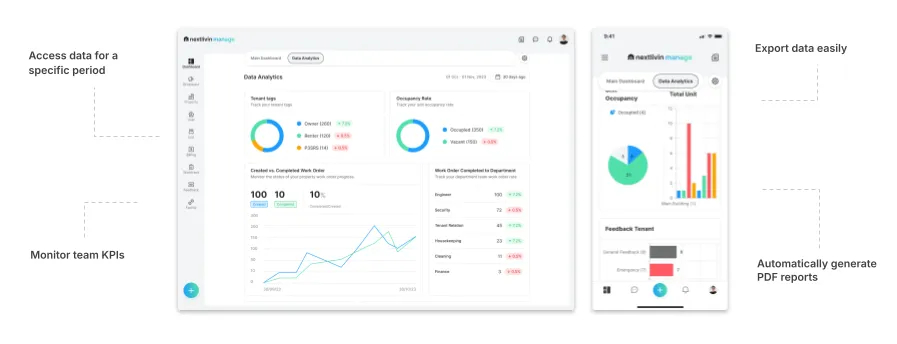
Budget planning becomes far harder when operational cost data is spread across separate spreadsheets owned by different departments. Nextlivin for Teams' dashboard and reporting pulls operational data into one place, so when budget season arrives, the data is already there to analyze — not something that has to be manually pieced together first.
How does your building currently plan its operating budget — already data-driven throughout the year, or still an end-of-year estimate? Share in the comments.
Schedule a free demo today!
📞 0818-958-899 🌐 www.nextlivin.com
Differences in IPL or service-charge data are not always caused by a calculation error. Common causes include an outdated unit record, a resident change, a corrected invoice, an unverified payment, or transaction proof scattered across chat messages. An IPL and tenant bill reconciliation checklist helps teams find differences before a bill is issued.
Reconciliation means matching records from several points before the issue becomes a complaint and creates repeated correction work. Set a regular rhythm, such as weekly for current transactions and before a new billing period is issued.

| Check | Question |
|---|---|
| Unit and tenant | Is the unit active and is the billing recipient correct? |
| Period | Does the billing period avoid overlaps or gaps? |
| Components | Are the calculation basis and cost components documented? |
| Amount | Does the amount follow the property rules and approved changes? |
| Correction | Does a replacement invoice reference the previous invoice? |
| Delivery | Is proof of delivery stored where the responsible team can access it? |
Match the reference number, date, amount, receiving channel, verification status, and payment proof. Use a working table: Unit | Tenant | Period | System amount | Amount received | Difference | Cause | Owner | Correction status | Proof.
A tenant changes halfway through the month. An admin updates the name in WhatsApp, but the master record remains unchanged. When finance corrects the invoice, a new screenshot is sent while the main record still shows the old invoice. To the tenant, this looks like two different bills. The answer is not simply another screenshot; update the source record, document the correction reason, and link the old and new invoices.
External data such as property-price indicators cannot be used as the IPL amount for a specific building. The BPS — Indeks Harga Properti Perumahan 2024 can provide market context, but transaction data, tariff rules, and payments must come from the property’s internal records. Keeping the two separate prevents reports and meetings from mixing different types of data.
Billing, Unit, User, Dashboard, and reporting capabilities in the Nextlivin features can connect to the Nextlivin Team workflow. The benefit is clearer visibility of changes, statuses, and follow-up—not a promise that every billing error disappears automatically. Assign one reconciliation owner and one cut-off time so finance, admin, and building management use the same record.
Start with one billing period. Review the five latest differences, group them by cause, and improve the process that repeats most often.
Schedule a free demo today! 📞 0818-958-899 🌐 www.nextlivin.com
Billing management is one of the most critical yet challenging aspects of residential property operations. Every month, management teams must ensure that invoices are generated accurately, payments are recorded correctly, and financial reports remain transparent and up to date.
However, many property management companies still face significant challenges in their billing processes. From complicated calculations and payment delays to data entry errors and time-consuming reconciliation procedures, billing can quickly become a source of operational stress.
As the number of managed units continues to grow, billing management becomes increasingly complex. When organizations rely on manual processes or disconnected systems, the risk of errors, inefficiencies, and repetitive administrative work rises significantly.
In today's digital environment, property managers need a solution that simplifies billing operations while improving accuracy, visibility, and efficiency.
Billing involves much more than simply issuing invoices and collecting payments. Behind every billing cycle are multiple processes that must be managed simultaneously.
Each unit may have different billing components, including:
Even minor calculation errors can affect resident trust and financial reporting accuracy.
Finance teams often spend significant time manually verifying payments and ensuring that every transaction has been recorded correctly.
When information is stored across multiple spreadsheets or systems, the likelihood of duplicate entries, inconsistencies, and missing records increases.
Without a centralized system, identifying overdue accounts and monitoring payment status can become a tedious and inefficient process.
Management teams often struggle to obtain an accurate and up-to-date overview of resident payment performance and cash flow status.
As a result, valuable time is consumed by administrative tasks that could otherwise be automated and streamlined.

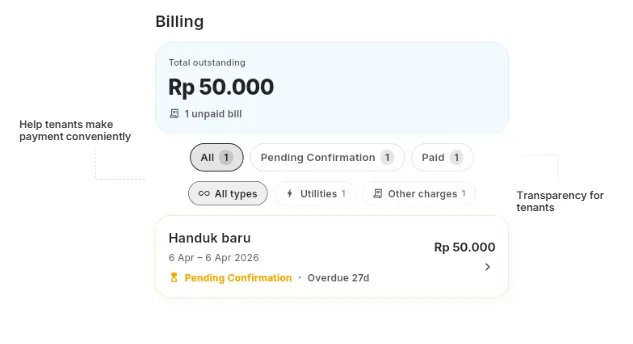
Nextlivin's Billing Management solution is designed to help property management teams simplify billing operations while improving accuracy and transparency.
Invoices can be generated and managed systematically, reducing repetitive manual work and improving operational efficiency.
Finance teams can instantly view payment statuses through a centralized dashboard, enabling faster decision-making and follow-up actions.
Overdue payments and outstanding balances can be identified quickly and accurately, helping management maintain healthy cash flow.
All transactions are documented automatically, making audits, reporting, and historical analysis significantly easier.
Building Managers and finance teams can access a complete overview of billing performance without gathering data from multiple sources.
By automating and integrating billing processes, teams can spend less time on manual administration and more time focusing on property operations and resident services.
Through digital transformation, billing processes that once felt complicated become simpler, more transparent, and easier to manage.
Digital transformation continues to reshape the property management industry, particularly in the area of financial operations and billing management.
More property management companies are adopting digital billing solutions to improve efficiency, accuracy, and transparency across their financial processes.
In addition to helping finance teams process payments more effectively, digital billing platforms also provide a better experience for residents by offering clearer payment information and more convenient access to billing records.
As Smart Building and Smart Living concepts continue to gain momentum, integrated billing systems are expected to become the new standard for modern property management operations.
Organizations that embrace digital billing technologies today are positioning themselves for greater efficiency and long-term operational success.

Billing is a vital component of property operations that directly impacts cash flow, team productivity, and resident satisfaction.
However, when billing processes rely on manual workflows or disconnected systems, operations become more complicated, time-consuming, and prone to errors.
Nextlivin simplifies these challenges through an integrated Billing Management solution that is easy to use, highly efficient, and designed to provide complete financial visibility.
With real-time payment monitoring, automated transaction records, clear outstanding balance tracking, and comprehensive financial dashboards, billing processes that once seemed overwhelming become significantly easier to manage.
Because effective billing management is not just about collecting payments—it is about creating a more efficient, transparent, and professional financial operation for everyone involved.
And that is exactly how Nextlivin transforms complex billing into a simple and seamless experience.

This Article is provided by Nextlivin, for more information about how Nextlivin can help manage your property efficiently, please kindly visit our site.
Ever feel like a hamster on a wheel, constantly filling vacancies left by departing tenants? You're not alone. Tenant turnover is a costly headache that plagues many properties. But what if I told you there are hidden costs that creep up beyond the obvious vacancy sign?
That's right, tenant turnover can silently drain your profits in surprising ways. Today, we'll expose these five sneaky money stealers and equip you with actionable tips to break free from the tenant turnover trap!
Now that you're aware of the hidden costs, let's talk solutions! Here are 5 Proven Strategies to Boost Tenant Retention and keep your building humming:
Proactive communication is key. Regularly check in with tenants, address concerns promptly, and cultivate a positive relationship. Happy tenants = Less likely to leave!
Offer perks that go beyond the basic rent – resident events, loyalty programs, or exclusive discounts with local businesses. Who can resist a little extra something?
Respond to maintenance requests quickly and efficiently. A leaky faucet today can turn into a frustrated tenant tomorrow (and maybe a bad online review!).
Clear communication is key. Lay out expectations, policies, and procedures clearly from the get-go. Informed tenants are happy tenants!
Utilize online portals for rent payments, maintenance requests, and communication. It streamlines processes and keeps tenants engaged.
But wait, there's more! We want to hear from YOU! What are your biggest challenges with tenant turnover? Share your thoughts in the comments below. Let's build a community of building managers who can conquer the turnover trap together!
As a property manager, you're always looking for ways to reduce costs. After all, every dollar saved goes straight to your bottom line. But with so many different expenses to manage, it can be tough to know where to start.
That's where a property management application can come in handy. These tools can help you automate tasks, streamline processes, and track your spending, all of which can lead to significant cost savings.
Here are just a few ways that a property management application can help you reduce costs:
Property management applications can automate a wide range of tasks, from tenant screening to rent collection to maintenance requests. This can free up your time so you can focus on more important things, like growing your business.
For example, a property management application can automatically send out tenant reminders, process rent payments, and create work orders for maintenance requests.
This can save you hours each week, which can translate into significant cost savings.

Property management applications can also help you streamline your processes. For example, a property management application can help you manage your tenant application process, lease agreements, and move-in/move-out inspections.
By streamlining your processes, you can reduce the amount of time and money you spend on administrative tasks.
This can free up your resources so you can focus on more important things, like providing excellent customer service to your tenants.
[Read more: How To Choose The Right Property Management Company]
Property management applications can also help you track your spending. This can help you identify areas where you can cut costs.
For example, a property management application can help you track your rental income, expenses, and cash flow.
This information can help you make informed decisions about your business, such as whether or not to raise rents or invest in new properties.

Let's say you manage a 10-unit apartment building. You're currently spending 10 hours per week on administrative tasks, such as tenant screening, rent collection, and maintenance requests.
If you implement a property management application, you can automate many of these tasks. This could save you up to 5 hours per week.
At a rate of $20 per hour, this would save you $100 per week, or $5,200 per year.
In addition to saving you time, a property management application can also help you streamline your processes and track your spending. This can lead to even more cost savings.
A property management application is a powerful tool that can help you reduce costs in a number of ways. By automating tasks, streamlining processes, and tracking your spending, you can save significant time and money.
If you're looking for ways to reduce costs, we highly recommend considering a property management application.
This article is provided by Nextlivin. For more information on how Nextlivin can assist you in efficiently managing your property, visit our website.
Don't forget to follow us on Instagram, Facebook, Twitter, Linkedin, TikTok for more content.
Operating expenses (OPEX) can be a major drain on your business's bottom line. But what exactly are OPEX, and how can you reduce them?
By the end of this post, you'll have a deep understanding of OPEX and how to manage them effectively. This will give you a competitive advantage and help you to grow your business.
So, let's get started!
Operating expenses, or OPEX, are the ongoing costs associated with running a business. They include things like rent, utilities, salaries, marketing, and insurance. OPEX can be broken down into two main categories: variable costs and fixed costs.
Variable costs are costs that fluctuate depending on your business's activity level. For example, the cost of goods sold and sales commissions are variable costs.
Fixed costs are costs that remain relatively constant, regardless of your business's activity level. For example, rent and insurance are fixed costs.

Opex is a broad term that encompasses a wide range of costs. Some common examples of OPEX include:
There are a number of ways to reduce your operating expenses. Here are a few tips:
One of the easiest ways to reduce your OPEX is to negotiate better rates with your vendors. This can be done by shopping around and comparing prices, or by threatening to switch to a different vendor.
Energy costs can be a major expense for many businesses. By switching to more energy-efficient appliances, you can save a significant amount of money over time.

Maintenance costs can also be a significant expense for businesses. By implementing preventive maintenance programs, you can reduce the need for emergency repairs and extend the life of your equipment.
It's important to have a budget for your OPEX so that you can track your spending and identify areas where you can cut costs.
It's also important to track your OPEX so that you can see where your money is going. This will help you to identify areas where you can make cuts.
There are a number of reasons why it is important to reduce operating expenses. By reducing OPEX, businesses can:

Here are some common mistakes that businesses make when managing OPEX:

Reducing your OPEX can be a challenge, but it's definitely worth it. By following the tips above, you can free up more cash to invest in your business and grow your bottom line. Happy saving!
This article is provided by Nextlivin. For more information on how Nextlivin can assist you in efficiently managing your property, visit our website.
Don't forget to follow us on Instagram, Facebook, Twitter, Linkedin, TikTok for more content.
Owning rental properties can be rewarding, but juggling rent payments, repairs, and vacancies can feel like steering a leaky ship through a typhoon. Fear not, seafaring landlord! This blog is your anchor, pulling you towards financial sustainability in property management.
Before navigating the open seas, a clear understanding of your financial landscape is crucial. This begins with:

Example: Imagine Sarah, a property manager with five apartments. By analyzing past rental patterns and upcoming lease expirations, she identifies a potential 10% dip in income next quarter. This forewarning allows her to optimize maintenance schedules and postpone non-essential upgrades, ensuring sufficient reserves during the anticipated lull.
Transition: With a clear picture of your income stream, it's time to turn our attention to the essential counterpoint – your expenses.
Just as harmony in music requires balancing instruments, sound financial management hinges on prioritizing expenditures. This involves:
Example: John, another property manager, renegotiated his waste disposal contract by switching to a local, environmentally friendly service. This not only reduced costs but also improved the building's green credentials, attracting environmentally conscious tenants and potentially increasing rental rates in the long run.
Transition: We've established the rhythm of income and the melody of expenses, but what happens when unforeseen storms threaten to disrupt the financial symphony?
No financial journey is free from unexpected turbulence. However, by implementing these strategies, you can weather the storms:
Example: Maria, a property manager, utilizes a rent collection app with automated reminders and late fees. This not only reduces delinquencies but also provides valuable data on payment trends, allowing her to proactively engage with tenants facing potential financial difficulties.

Cash flow management in property management is not about eliminating risk, but about understanding and mitigating it. By mastering the art of income forecasting, prioritizing expenditures, and building financial resilience, you can achieve financial sustainability in your property management.
With dedication and proactive strategies, you can navigate the currents with confidence, ensuring the long-term success and profitability of your investments.
This article is provided by Nextlivin, For more information on how NextLivin can assist you in efficiently managing your property, visit our website. Don't forget to follow us on Instagram, Facebook, Twitter, Linkedin, TikTok for more content.
As a property owner, taxes are an unavoidable part of your operations and finances. But savvy tax management isn't just a requirement, it's a potential goldmine for maximizing profits and minimizing financial burdens. This article unlocks the secrets of property tax optimization, paving the way to optimal tax handling and a happy wallet.
Deductions are your first "secret weapon." They allow you to reduce your taxable income from the property. Routine maintenance costs, minor repairs, even security guard salaries can count. Gather those receipts and payment proofs as your ammunition!
Example: Your rental house earns Rp 5 million per month. In a year, your gross income is Rp 60 million. You spend Rp 6 million on kitchen renovations and Rp 3 million on the security guard. Your taxable income becomes Rp 51 million (Rp 60 million - Rp 6 million - Rp 3 million). Such an advantage!

Depreciation might sound technical, but don't underestimate its power. It's a way to "shrink" your property's value in the eyes of the taxman, meaning you pay less. Remember, this isn't magic, it's based on your building's lifespan and government regulations.
Example: Your office building is worth Rp 2 billion with a 30-year lifespan. Each year, your property's value "shrinks" by Rp 66.6 million (Rp 2 billion / 30 years). You pay taxes based on this "shrunken" value, not the original one.
While property insurance fees might feel like an extra expense, it's a clever long-term investment. Why? Insurance premiums can be counted as business expenses, further reducing your taxable income. So, even though your wallet takes a temporary hit, it gets refilled later!

Choosing the right tax type is strategic. There are two taxes levied on properties: PPh and PBB. Calculate which is more advantageous for you. PPh is based on annual rental income, whereas PBB is based on the Property Tax Object Value (NJOP).
Example: Your property's net rental income is Rp 12 million per year. Your PPh rate is 10%. You pay Rp 1.2 million. But, your property's NJOP is Rp 300 million with a 0.3% PBB rate. You pay Rp 900,000. In this case, PBB is "lighter."
Taxes can seem daunting, but fear not! Many resources are available. Consult a tax advisor, read trusted articles and blogs, or even join a property owner community to share tips and experiences.
With the right strategies, taxes become opportunities for financial optimization, not monsters in the closet. This article is just your first step. Keep learning, collaborate, and witness the sweetness of smart tax management. Congratulations on becoming a wise property owner who conquers taxes!
This article is provided by Nextlivin, For more information on how NextLivin can assist you in efficiently managing your property, visit our website. Don't forget to follow us on Instagram, Facebook, Twitter, Linkedin, TikTok for more content.
Operating expenses (OPEX) can be a major drain on your business's bottom line. But what exactly are OPEX, and how can you reduce them?
By the end of this post, you'll have a deep understanding of OPEX and how to manage them effectively. This will give you a competitive advantage and help you to grow your business.
So, let's get started!
Operating expenses, or OPEX, are the ongoing costs associated with running a business. They include things like rent, utilities, salaries, marketing, and insurance. OPEX can be broken down into two main categories: variable costs and fixed costs.
Variable costs are costs that fluctuate depending on your business's activity level. For example, the cost of goods sold and sales commissions are variable costs.
Fixed costs are costs that remain relatively constant, regardless of your business's activity level. For example, rent and insurance are fixed costs.
Opex is a broad term that encompasses a wide range of costs. Some common examples of OPEX include:
There are a number of ways to reduce your operating expenses. Here are a few tips:
One of the easiest ways to reduce your OPEX is to negotiate better rates with your vendors. This can be done by shopping around and comparing prices, or by threatening to switch to a different vendor.
Energy costs can be a major expense for many businesses. By switching to more energy-efficient appliances, you can save a significant amount of money over time.
Maintenance costs can also be a significant expense for businesses. By implementing preventive maintenance programs, you can reduce the need for emergency repairs and extend the life of your equipment.
It's important to have a budget for your OPEX so that you can track your spending and identify areas where you can cut costs.
It's also important to track your OPEX so that you can see where your money is going. This will help you to identify areas where you can make cuts.
There are a number of reasons why it is important to reduce operating expenses. By reducing OPEX, businesses can:
Here are some common mistakes that businesses make when managing OPEX:
Reducing your OPEX can be a challenge, but it's definitely worth it. By following the tips above, you can free up more cash to invest in your business and grow your bottom line. Happy saving!
This article is provided by Nextlivin. For more information on how Nextlivin can assist you in efficiently managing your property, visit our website.
Don't forget to follow us on Instagram, Facebook, Twitter, Linkedin, TikTok for more content.
As a property manager, you're always looking for ways to reduce costs. After all, every dollar saved goes straight to your bottom line. But with so many different expenses to manage, it can be tough to know where to start.
That's where a property management application can come in handy. These tools can help you automate tasks, streamline processes, and track your spending, all of which can lead to significant cost savings.
Here are just a few ways that a property management application can help you reduce costs:
Property management applications can automate a wide range of tasks, from tenant screening to rent collection to maintenance requests. This can free up your time so you can focus on more important things, like growing your business.
For example, a property management application can automatically send out tenant reminders, process rent payments, and create work orders for maintenance requests.
This can save you hours each week, which can translate into significant cost savings.
Property management applications can also help you streamline your processes. For example, a property management application can help you manage your tenant application process, lease agreements, and move-in/move-out inspections.
By streamlining your processes, you can reduce the amount of time and money you spend on administrative tasks.
This can free up your resources so you can focus on more important things, like providing excellent customer service to your tenants.
[Read more: How To Choose The Right Property Management Company]
Property management applications can also help you track your spending. This can help you identify areas where you can cut costs.
For example, a property management application can help you track your rental income, expenses, and cash flow.
This information can help you make informed decisions about your business, such as whether or not to raise rents or invest in new properties.
Let's say you manage a 10-unit apartment building. You're currently spending 10 hours per week on administrative tasks, such as tenant screening, rent collection, and maintenance requests.
If you implement a property management application, you can automate many of these tasks. This could save you up to 5 hours per week.
At a rate of $20 per hour, this would save you $100 per week, or $5,200 per year.
In addition to saving you time, a property management application can also help you streamline your processes and track your spending. This can lead to even more cost savings.
A property management application is a powerful tool that can help you reduce costs in a number of ways. By automating tasks, streamlining processes, and tracking your spending, you can save significant time and money.
If you're looking for ways to reduce costs, we highly recommend considering a property management application.
This article is provided by Nextlivin. For more information on how Nextlivin can assist you in efficiently managing your property, visit our website.
Don't forget to follow us on Instagram, Facebook, Twitter, Linkedin, TikTok for more content.
Do you feel like you're spending too much money on property management costs? If so, you're not alone. Many property owners find that their property management costs eat into their profits.
But there are a few things you can do to save money on property management costs without sacrificing the quality of service you provide to your tenants.
One of the best ways to save money on property management costs is to choose the right property management company.
Not all property management companies are created equal, and some companies charge more than others for their services. It's important to compare quotes from multiple companies before you choose one.

When choosing a property management company, be sure to consider the following factors:
If you're willing to put in a little work, you can save money on property management costs by managing some tasks yourself. For example, you can:

If you have a good relationship with your vendors, you may be able to negotiate lower rates for their services. For example, you could negotiate a lower rate with your landscaping company or your HVAC contractor.
There are a number of technology tools that can help you save money on property management costs. For example, you can use property management software to automate tasks such as rent collection and maintenance requests. You can also use social media to market your properties and find new tenants.
By following these tips, you can save money on property management costs without sacrificing the quality of service you provide to your tenants. Just remember to do your research and choose the right property management company for your needs.
I hope this blog post has been helpful. If you have any questions, please leave a comment below.
This article is provided by Nextlivin, For more information on how Nextlivin can assist you in efficiently managing your property, visit our website.
Don't forget to follow us on Instagram, Facebook, Twitter, Linkedin, TikTok for more content.
Do you ever feel like you're constantly juggling too many bills and expenses, especially when it comes to managing your property? If so, you're not alone. Property management budgeting can be challenging, but it's essential for staying on top of your finances and ensuring the long-term success of your property.
In this blog, we'll walk you through the steps of creating and managing a property management budget. By following these tips in this blog post, you can create a budget that will help you:
If you're ready to learn how to do property management budgeting effectively, keep reading! 💸

Budgeting is the process of creating a financial plan that outlines your expected income and expenses over a specific period, usually monthly or annually. It's a fundamental tool for managing your finances, whether it's for personal expenses or, in this case, property management.
To start, gather all the relevant financial data for your property. This includes your sources of income, like rent, any mortgage payments, utilities, maintenance costs, insurance, and property taxes. Essentially, you want a comprehensive view of your property's financial landscape.
Once you have a clear snapshot of your current financial situation, it's time to look ahead. Consider factors like upcoming rent increases, planned renovations or repairs, and potential changes in operating expenses due to inflation.
For instance, let's say you're planning a $10,000 renovation within the next year. This cost needs to be factored into your budget.

Ask yourself: What do you want to achieve with your budget? Do you want to save money for a down payment on a new property? Pay down debt? Invest in your property?
Understanding your financial goals will help guide the budget allocation process. Once you know your goals, you can start to allocate your resources accordingly.
For instance, if you decide to allocate 10% of your rental income to build a reserve fund and 15% to pay down debt, you're setting clear budget goals.
Now, let's create your budget:

This is where you'll list all of your income and expenses, and allocate your money to different categories. Be sure to include categories for all of your essential expenses, such as mortgage, utilities, and insurance. You may also want to include categories for savings, maintenance, and investment.
A property management budget is not set in stone. You'll want to revisit and adjust it periodically:

☑️ Be realistic. When creating your budget, it's important to be realistic about your income and expenses. Don't try to squeeze too much money into each category.
☑️ Track your spending. Once you have a budget in place, it's important to track your spending to make sure you're staying on track. You can use a spreadsheet or budgeting app to track your income and expenses.
☑️ Make adjustments as needed. As mentioned above, your financial situation can change over time. Be sure to review your budget regularly and make adjustments as needed.
☑️ Find ways to save money. There are many ways to save money on your property expenses. For example, you can shop around for better insurance rates, negotiate with vendors, and make energy-efficient upgrades to your property.

Property management budgeting is essential for maintaining financial stability and achieving your property management goals.
Remember, your property management budget is a dynamic tool. It provides a clear roadmap for allocating resources, prepares you for unexpected expenses, and helps you work toward your financial objectives. Stay realistic, keep an eye on your spending, and make adjustments as necessary to ensure your property's financial health! 😉
This article is provided by Nextlivin, For more information on how Nextlivin can assist you in efficiently managing your property, visit our website.
Don't forget to follow us on Instagram, Facebook, Twitter, Linkedin, TikTok for more content.
Understanding how utility billing works in apartments is essential for both tenants and property owners. This system affects how utility costs are divided and paid within the apartment environment. In this article, we will provide a detailed explanation of how the utility billing system operates in the context of apartments, the associated responsibilities, and how to resolve utility-related disputes.
The utility billing system in apartments involves specific steps:
Recording Utility Usage: Apartment management records utility usage, such as electricity, water, and often trash, for each unit.
Calculating Costs: Based on the usage of each unit, the management calculates monthly utility costs.
Monthly Billing: Each tenant receives a monthly bill that itemizes their utility costs.
Payment: Tenants are responsible for paying their utility costs along with their monthly rent.

Responsibilities in apartment utility billing are typically outlined in the lease agreement and may vary between properties. However, in general:
Apartment Management: Typically, apartment management is responsible for monitoring utilities, calculating costs, and making payments to utility companies.
Tenants: Tenants are responsible for paying their utility costs promptly and reporting utility issues if they arise.

Utility-related disputes in apartments can be addressed through the following steps:
Communication: The first step is to communicate with the apartment management. Many issues can be resolved through open conversations.
Review Lease Agreement: Review the lease agreement to understand the provisions related to utility billing and the responsibilities of each party.
Mediation: If disputes cannot be resolved through direct communication, consider mediation by a neutral third party.
Legal Action: If all other efforts fail, legal assistance may be required.
Understanding the utility billing system in apartments is crucial for maintaining a good relationship between tenants and management. With effective communication and a clear understanding of responsibilities, many issues related to utility billing can be avoided.
We hope this article provides a better understanding of how the utility billing system works in apartments. Remember to always refer to the lease agreement and communicate effectively with all parties involved.
This article is provided by Nextlivin, For more information on how NextLivin can assist you in efficiently managing your property, visit our website.
Don't forget to follow us on Instagram, Facebook, Twitter, Linkedin, TikTok for more content.
In the realm of real estate, there are numerous aspects that demand careful attention and management. One crucial aspect that needs to be efficiently organized is the apartment management fee, known as the apartment service charge. Service charge, or maintenance fee, plays a pivotal role in maintaining the smooth management and upkeep of properties. In this blog post, we will provide a comprehensive explanation of apartment service charge, ranging from its definition to the calculation process 💸
Apartment service charge is a monthly fee (usually) paid by apartment residents to cover the expenses of management, maintenance, and facility provision within the apartment complex. This fee is managed by the property manager or the responsible party overseeing the apartment's management.
Through the collection of service charges, property managers ensure that the facilities and services provided to residents remain optimal and sustainable.
The primary objective of the apartment service charge is to ensure that the condition of facilities within the apartment complex remains well-maintained. Some key benefits of service charge include:
Apartment service charge fees can be calculated based on several factors, including the number of facilities provided, apartment complex size, and geographical location. Generally, service charge costs are divided evenly among all apartment residents. Here are some general steps to calculate Apartment service charge fees:
Collecting service charges (maintenance fees) is a crucial step in property management, particularly in the context of apartments. Here are some strategies that can assist property managers in efficiently and successfully collecting service charge:
Collecting apartment service charge isn't just about requesting payment from residents—it's about maintaining a balance between property maintenance and residents' financial needs. By employing effective strategies, property managers can ensure that service charge funds are utilized wisely to uphold the facilities and services provided to residents, creating a comfortable and sustainable living environment.
In the world of property management, apartment service charge plays an irreplaceable role. This fee not only maintains facility quality but also supports the smooth operation and management of apartment complexes. Transparency in service charge billing and collection is vital to nurturing a positive relationship between property managers and residents.
By understanding the concept and benefits of apartment service charge, property managers and apartment residents can collaborate to create a comfortable and functional living environment.
This article is provided by Nextlivin, For more information on how Nextlivin can assist you in efficiently managing your property, visit our website.
Don't forget to follow us on Instagram, Facebook, Twitter, Linkedin, TikTok for more content.


Dapatkan free trial untuk menggunakan Nextlivin selama 14 hari!
Enter contact details to access and download our report
Enter your contact details to access and download our report