by

Apartment water meter validation helps the team separate genuine usage changes from recording errors before an invoice reaches a resident. When a charge is questioned, “the number came from the system” is not a useful explanation. The team needs a traceable meter, reading period and calculation basis.
This workflow concerns data checks before billing. Technical testing, meter replacement and tariff decisions remain subject to the property’s authorized procedures and applicable arrangements.
Start apartment water meter validation with identity
Match the meter identifier to the apartment or common area it serves. Do not rely only on its position, particularly after refurbishment or replacement. Keep the checked mapping, reading date, responsible employee and appropriate reading evidence together.
Record a replacement as a separate event. The new meter’s opening number cannot simply be compared with the old device’s final number without a replacement record. If the mapping is uncertain, mark it for verification before including it in the ordinary billing calculation.
Compare equivalent periods and units
The difference between two readings needs the length of the reading period for context. A 35-day interval is different from a 28-day interval. Check measurement units and number formatting as well. Do not move a decimal point merely because the display looks unfamiliar.
The EPA WaterSense guide to metering and submetering explains how measurement helps teams understand water use and identify potential problems. For billing operations, the practical starting point is traceable usage data before charges are calculated.
Give unusual readings a verification queue
Review the previous period, days between readings, occupancy changes and relevant maintenance records. A higher reading is not automatic proof of a leak or resident misuse. Arrange a repeat reading or an appropriate technical check when needed.
An illustrative transposed reading
An employee enters 1,280 while the reading evidence shows 1,208. Reviewing only the final invoice total may miss the discrepancy. A team that examines unusual entries can flag it, verify the source, record the correction and preserve the reason. This describes an illustrative workflow rather than a particular customer.
Separate data corrections from charge adjustments
A recording error needs a traceable correction. Verified higher use needs an explanation based on the period and relevant records. An approved adjustment to the charge is a separate decision. Retain enough history to explain why a figure changed instead of silently replacing the original entry.
Once the underlying figures are reliable, the IPL aging and follow-up workflow can support payment priorities. Reading verification and outstanding-balance follow-up serve different purposes.
Review utility inputs in a Billing demo
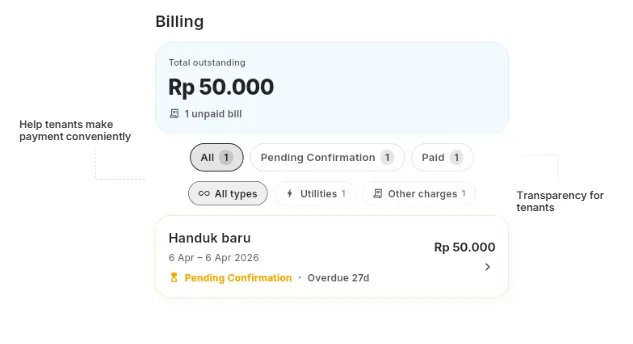
Nextlivin Billing supports property invoicing workflows. Ask the team to demonstrate how utility inputs, formulas and corrections fit your process. Discuss any meter-integration requirements explicitly rather than assuming every device connects automatically.
Frequently asked questions
Should every increase stop the billing process?
No. Define internal review criteria so entries requiring verification can be prioritized without putting the entire billing cycle on hold.
What should a resident explanation include?
Prepare the relevant meter reference, period, opening and closing readings, and calculation under the property’s arrangements. Share it privately through an approved service channel.
Explore your workflow with Nextlivin
Bring one operational example without residents’ personal data. Book a demo or meeting on Nextlivin WhatsApp at +62 818-958-899 to discuss apartment water meter validation. To try the workflow with your team, explore the Nextlivin free trial and confirm its scope and terms with the team.